The Island That Empties in November
I came back to Santorini in the third week of November, five months after my last trip, and the first thing I noticed wasn’t the cold. It was the quiet on the caldera path. In August I’d shared that ledge above Imerovigli with a hundred people angling for the same photo. This time I had it to myself for twenty minutes, just me, a dog trotting ahead, and the The Meltemi Wind in Santorini, Explained doing its best impression of a gale off the cliff edge.
Nobody had warned me it would feel this specific. Not empty like a shuttered building, not sad like a town after a festival. Just recalibrated, running on a different clock, the way a beach town does after Labor Day. I’d read the Santorini in Winter: What Actually Stays Open before I booked, and it had told me the facts — shorter hours, closed hotels, fewer boats. What it couldn’t tell me was what it’s like to actually stand in Oia, Santorini: The Sunset Village on the Caldera Rim at four in the afternoon with maybe thirty other people instead of three thousand.
What actually closes, and what doesn’t
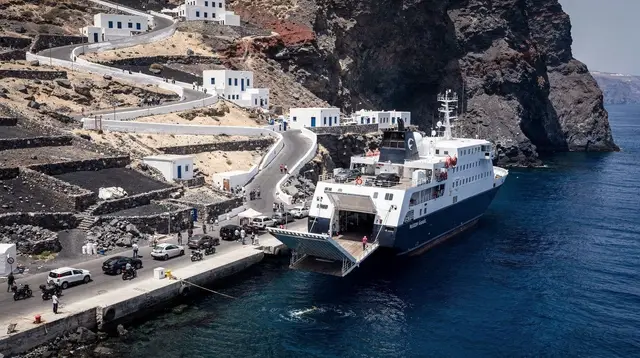
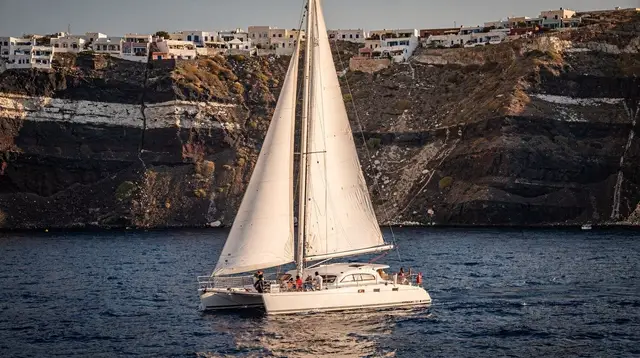
The caldera runs on tourism money, and a lot of that money takes November through March off. Plenty of the cliffside hotels in Fira, Santorini: The Capital on the Caldera, Imerovigli and Oia shutter completely, their owners off in Athens or wherever they go when the season ends. Restaurants that packed three seatings a night in July post handwritten signs in the window: back in April. Several of the caldera cruise operators — the catamarans that spend summer running the same loop past Nea Kameni and Palea Kameni all day — cut down to a couple of sailings a week, weather permitting, and some stop outright until spring.
But “closed” isn’t the same as “gone.” Fira never really goes quiet, because Fira isn’t only a tourist stage — people live and work there year-round, and the island’s port, airport, hospital, schools and supermarkets don’t take a season off. The The Santorini Wineries mostly stay open too, on shorter hours, and honestly they’re better this way: I did a tasting at one caldera-facing estate with three other people at the table instead of thirty, and the pourer had time to actually talk about what makes an Assyrtiko taste like this soil and no other.
Here’s roughly how it breaks down, based on what I saw walking around in late November:
| Category | June–September | November–March |
|---|---|---|
| Caldera hotels & restaurants | Fully open, booked out | Many closed; a reduced set stays open |
| Caldera cruises & sunset sails | Multiple daily departures | Cut back sharply; some pause entirely |
| Wineries & tastings | Open, often crowded | Open on shorter hours, far quieter |
| Museums (Akrotiri, Prehistoric Thera) | Open, full hours | Open, sometimes reduced hours |
| Ferries to other islands | Frequent, multiple operators | Fewer sailings, more weather cancellations |
| Fira town, shops, daily life | Busy with visitors | Runs on local rhythm, no cruise crush |
That table is a snapshot, not a booking guide — for actual planning, the Travel tips for Santorini hub and the seasonal category under Seasonal Guide do that job properly. This piece is just about what it feels like to be there.
The grapes were long gone
I kept expecting to stumble on some lingering trace of harvest season, and there wasn’t one. Santorini picks its grapes early — often starting in late July and running through August, well before most of Europe even starts thinking about vendange, because the vines here are stressed by heat and drought rather than waiting for autumn cool.
By the time I arrived in November, the kouloura vines around Pyrgos: Santorini’s Hilltop Village and Island-Wide Panorama and Megalochori: Santorini’s Quiet Inland Village were bare, coiled baskets of dry cane sitting in fields that had already given up their fruit months earlier. It reframed something for me: the island’s growing season and its tourist season don’t overlap the way you’d assume. The vines are working hardest exactly when the beaches are busiest, and resting exactly when I was walking past them.
A boat, a minibus, and not much competition for either
I still wanted to see the volcano up close, so I checked what was running. A smaller outfit was still doing the boat trip out to Nea Kameni’s crater and the rust-colored hot springs at Palea Kameni, just at reduced frequency, and I had six other passengers instead of sixty. The same was true of the full-day sightseeing and sunset sail around the island — one of the few caldera cruises still operating that week, and worth checking ahead rather than assuming.
On land, a small-group minibus tour originally built for cruise passengers was still running for regular visitors, since so few ships call in winter anyway. And in the late afternoon I joined a minibus circuit through Oia, Pyrgos and Imerovigli timed for sunset — the same three viewpoints that get mobbed in July, this time with room to actually stand still and look.
None of this means winter Santorini is a theme park running at reduced staff. It means the handful of things still operating are run by people who live here and are doing this because they want to, not because a cruise ship just emptied into the port. The pace of the conversation changes. My boat driver on the volcano trip pointed out where he’d grown up on Thirassia: Santorini’s Quiet Sister Island and talked for ten minutes about the 2025 earthquake swarm — the weeks in early 2025 when tens of thousands of tremors sent part of the island’s population away for a while.
It never erupted, and by the time I visited it was long over, but it’s clearly still part of how people here talk about their winters, matter-of-factly, not as a warning sign. If that’s a subject you want covered properly rather than in passing, the Santorini Safety and the 2025 Earthquakes does that.
Walking a caldera path built for July, alone
The The Fira to Oia Caldera Hike: Full Trail Guide is brutal in August heat, and I’d always pictured it as something you had to survive rather than enjoy. In November it was a different hike altogether — cool enough to actually notice the geology instead of just the sun, and quiet enough that I could hear the meltemi picking up over Skaros Rock before I could see it. I still wouldn’t do the whole 10.5 kilometers without a plan for the walk back, because the buses thin out even further off-season and there’s no shortcut once you’re past Imerovigli.
What I’d actually tell someone weighing this
If your image of a trip here is the postcard — packed caldera bars, a dozen boats crossing the bay at sunset, restaurants full past midnight — winter isn’t that, and it won’t pretend to be. But if you’d rather stand on a viewpoint without twenty phones in your peripheral vision, taste a wine without shouting over a bus tour, or walk a village lane and hear actual conversation instead of a dozen different languages of small talk, this is a genuinely different, genuinely good version of the island. It isn’t June with the volume turned down. It’s the island running its own errands, and for a few days, letting me tag along.
Questions about visiting Santorini between November and March
Do hotels and restaurants really close in winter?
Many do, particularly smaller family-run places on the caldera in Fira, Imerovigli and Oia. A reduced set stays open year-round, especially in Fira, but it’s worth confirming opening dates directly before booking rather than assuming availability.
Are the caldera cruises still running?
Some are, at a much lower frequency, and a few pause entirely between roughly November and March. Weather and demand both affect the schedule, so checking a specific departure date ahead of time matters more in winter than in summer.
Is the island less safe because of the 2025 earthquake swarm?
No. That swarm, which ran from late January through March 2025, produced tens of thousands of tremors but no eruption, and it ended months before this piece was written. It’s a real part of recent island history worth knowing about, not an ongoing danger.
Can I still visit the volcano and the hot springs off-season?
Often yes, though with fewer daily departures than in summer. Smaller operators tend to keep a limited schedule running through the winter for the visitors who do come.
Is the wine harvest happening when I’d visit in winter?
No. Santorini’s grapes are typically picked from late July into August, well ahead of most of Europe, so by November the vines are already bare and the new vintage is already fermenting.
Will I still get the Oia sunset experience?
You’ll get a version of it, with far fewer people competing for the same spot. Some off-season days bring cloud cover that summer’s dry heat rarely does, so it’s less guaranteed than in July, but the reward for the ones that clear is a nearly empty viewpoint.
Are ferries to other islands reliable in winter?
Less so than in summer. Sailings are less frequent and more prone to cancellation in bad weather, so island-hopping plans need more flexibility built in during these months.
Is winter cheaper than summer?
Generally, yes, particularly for accommodation, since demand drops sharply once the caldera hotels that do stay open have far fewer visitors chasing the same rooms.
tours.Reportage
Verified deep-linked GetYourGuide tours. Book through these links and we earn a small commission at no cost to you.
GetYourGuide does not provide a product photo for this activity — the image shows the meeting point, photographed by us.