Santorini in the Shoulder Season: Late April, May and October
Is the shoulder season a good time to visit Santorini?
Late April to May and October give Santorini's best balance of thinner crowds, lower prices and reliable weather. The trade-off is the sea: it is still cold in May and only turns genuinely comfortable for swimming by October.
The trade-off nobody argues with
Every returning visitor to Santorini eventually says some version of the same thing: come in July or August for the party, or come in late April, May or October for the island itself. The caldera doesn’t change with the calendar, but almost everything around it does — how many people are standing next to you at sunset, what a room in Oia costs per night, and whether the Fira-to-Oia caldera path is a pleasant walk or a slow shuffle through a crowd.
This guide covers the two windows that consistently come out ahead on that trade-off: late April into May, and October. It does not cover winter, when a large share of the island’s hotels, restaurants and boats close outright — that’s a different proposition, addressed on its own page. And it doesn’t try to settle the full argument between every month of the year, which is the job of our broader best time to visit Santorini guide. What follows is narrower and more practical: if you’ve already decided you want to avoid the July-August crush without giving up a working island, which weeks should you actually pick, and what should you expect from each.
Why the shoulder months work
Three things move together in Santorini’s calendar: temperature, crowd size and price. In peak summer all three are at their highest. In deep winter all three collapse, but so does the island’s infrastructure — many caldera hotels, restaurants and cruise operators simply shut. The shoulder months are the compromise: warm enough to enjoy, quiet enough to feel like a real place, and open enough that you’re not improvising around closures.
A few structural facts explain why this window exists at all. Santorini has a hard cap of 8,000 cruise-ship passengers a day, and the ships that drive Fira and Oia’s worst congestion run a much lighter schedule outside June through September. The meltemi, the strong north wind that can cancel boat trips and make some beaches uncomfortable in July and August, is present in spring and autumn but rarely at full summer strength. And prices for rooms with a caldera view, which spike hard in high season, ease back noticeably once the peak months end.
None of this means the shoulder season is empty. Late April and May, and especially the first half of October, still see meaningful tourist numbers — this is Santorini, not a hidden island. The difference is proportion: you’ll get a table without a wait, a spot at Firostefani or Imerovigli for sunset without arriving two hours early, and a caldera cruise that doesn’t feel like a flotilla.
Late April and May: the quieter, cooler window
Spring is when Santorini wakes up. Wildflowers cover the volcanic soil around the vineyards near Pyrgos and Megalochori, the kouloura-trained vines are budding rather than fruiting, and the light has a clarity that photographers particularly value. Daytime temperatures are comfortable for walking, touring Akrotiri or the Ancient Thira site, and covering the Fira-to-Oia path without the punishing midday heat of July.
The honest catch is the sea. The Aegean carries winter’s chill well into spring, and in May it is still cold by most swimmers’ standards. If a beach day with actual swimming is central to your trip, May will disappoint you more than it should — a short dip is fine, a relaxed afternoon in the water is not really on offer yet. This is the single most common mismatch between what people expect from a “spring in Greece” trip and what the water temperature actually delivers.
There’s a second, smaller catch worth flagging honestly: not everything is open yet. Some hotels and restaurants along the caldera rim close for winter and reopen gradually through April, and a few wait until closer to May before their terraces are fully staffed. It rarely derails a trip, but if a specific restaurant or boutique hotel matters to you, it’s worth checking that property’s own opening date rather than assuming the whole island is at full capacity by April 1st.
What late April and May do very well:
- Walking and hiking, including the full Fira-to-Oia caldera path, in comfortable temperatures
- Wine tasting at wineries before the summer rush, with staff who have more time to talk you through Assyrtiko
- Photography, with softer light and greener surroundings than late summer
- Sunset watching from Oia, Imerovigli or a boat, without the worst of the crowd
What it does less well: swimming, and anything that depends on every business being open at full tilt.
October: warmer water, a busier start
October flips the trade-off. By early autumn the sea has spent months absorbing summer heat, and it stays genuinely comfortable for swimming well into October — for many visitors, this is the best swimming window on the island, better than the cooler shoreline of early June. Grape harvest on Santorini happens unusually early by European standards, often from late July into August, so by October the vineyards are past picking and the wineries are settled into a quieter tasting-room rhythm rather than a working harvest.
Early October, though, is not yet quiet. It carries a tail of high-season momentum: cruise calls, tour groups and caldera hotel rates that haven’t fully come down from summer peaks. The shift toward genuinely calmer, cheaper travel happens gradually through the month, and by the back half of October the difference from August is unmistakable — thinner queues for the cable car, easier tables in Fira, and a noticeably more relaxed old port.
The other thing shifting in October is the wind. The meltemi that dominates July and August tapers off, which generally means more stable conditions for caldera cruises and boat excursions to Thirassia or the volcanic islets — though the Aegean is never wind-free, and any given week can still bring a rougher day.
What October does very well:
- Swimming and beach time at Perissa, Kamari and Perivolos
- Boat trips to Nea Kameni and the hot springs at Palea Kameni, with calmer seas than midsummer
- A settled, less frantic wine-tasting scene at Santorini’s wineries
- A gentler runway into the island’s own winter, if you want a preview of the quieter side without the closures
What it does less well, at least in the first half of the month: crowds and prices, which haven’t fully let go of summer yet.
Shoulder season side by side
| Late April – May | October | For comparison: July – August | |
|---|---|---|---|
| Sea temperature | Cold, brief dips only | Warm, comfortable swimming | Warm, but crowded beaches |
| Crowds | Building, generally light | Heavier early, lighter late | At their peak |
| Prices | Below peak | Above spring, below peak in early Oct | Highest of the year |
| Meltemi wind | Present, usually mild | Present, usually mild, easing later in month | Strongest and most frequent |
| Hotel/restaurant openings | Ramping up through the month | Fully open, starting to wind down late in month | Fully open |
| Best for | Walking, wine, photography | Swimming, boat trips, calmer wineries | Nightlife, full beach season |
Numbers here are deliberately relative rather than exact — Santorini’s weather, like most Mediterranean islands, varies year to year, and the point of this table is the pattern, not a promise about any specific week.
A practical way to choose between the two
If a comfortable swim matters more than anything else, October beats May outright — the water simply isn’t there yet in spring. If you’d rather have the island as quiet as it gets, are happy skipping serious swimming, and want good conditions for hiking, wine and photography, late April into May is the stronger pick. Families balancing both often lean toward late September or October rather than spring, precisely because swimming tends to matter more to children than a slightly thinner crowd does.
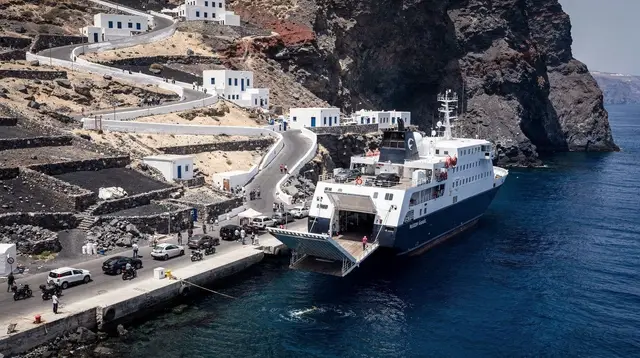
Either window also softens some of Santorini’s well-known logistical pain points. The queue for the cable car up from the old port is shorter. A table for dinner in Oia with a caldera view is easier to find on short notice, though still worth booking. And the Athinios ferry port, which turns into a genuine bottleneck on peak-season arrival days, runs a calmer operation with fewer simultaneous boats.
It’s also worth being direct about scale: the shoulder season makes Santorini noticeably more comfortable, not empty. This remains one of the most visited islands in the Aegean, and even a quiet October afternoon in Oia has other travellers in it. If total solitude is the goal, winter is the closer answer — with the understanding that a large share of caldera hotels, restaurants and cruise operators close for the season entirely.
One more point that belongs on any page discussing Santorini’s calendar and safety: in early 2025, an earthquake swarm between Santorini and nearby Amorgos lasted roughly forty days and triggered a temporary local state of emergency, school closures and a wave of departures from the island. It did not produce an eruption, and the swarm has long since ended. It has no practical bearing on choosing a shoulder-season trip, but it’s a fact worth knowing rather than encountering for the first time as a rumour once you’ve already booked.
Getting the most from a shoulder-season cruise or boat trip
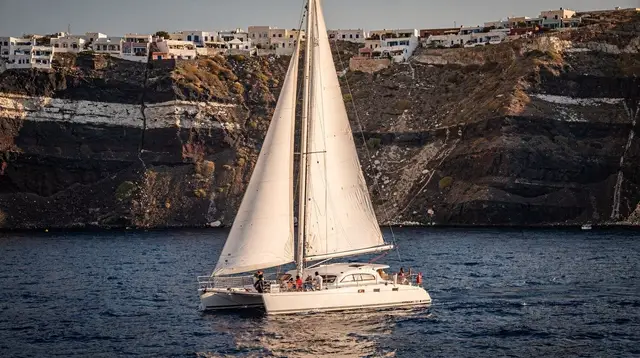
Because sea conditions and crowd levels shift so much between April, May and October, it’s worth matching your boat trip to the month rather than booking on autopilot. A daytime run around the caldera works well in either window and is generally calmer outside peak summer wind:
a full-day Santorini cruise around the calderaSunset from the water sidesteps the crowd problem at the Oia castle almost entirely, and is arguably at its best in the softer light of spring or early autumn:
a sunset cruise along the calderaFor visitors who want the postcard views without joining the busiest lookout points on land, a guided tour of the island’s photogenic spots timed for quieter shoulder-season crowds is worth considering:
a guided tour of Santorini’s most photogenic spotsPlanning notes specific to these months
A few smaller, practical points round out the picture. Bring layers for both windows: evenings can turn cool in May and again by late October, even when the day was warm. Pack for wind regardless of month — a light jacket earns its place on any caldera cruise or evening walk along the rim. And if a particular restaurant, winery tour or boutique hotel is central to your plans, confirm its shoulder-season opening dates directly rather than assuming the whole island runs on one uniform calendar — individual businesses set their own schedules, and they don’t all agree with each other.
Ferry schedules also thin out slightly outside peak summer, particularly toward longer routes to farther Cyclades islands, so if a day trip or island-hopping leg is part of your plan, check crossing frequency for your specific dates rather than assuming the full summer timetable is running.
Shoulder season questions, answered
What counts as shoulder season in Santorini?
Late April through May, and October, sit between the closed winter months and the packed, hot peak of June to September. Some businesses treat early June and early October as an extension of high season, so the calendar is a guide, not a hard line.
Is the sea warm enough to swim in May?
Not really. The Aegean is still cold from winter in May, and most visitors find the water bracing rather than pleasant. It warms steadily through the summer and stays comfortable well into October, which is one of the strongest arguments for choosing autumn over spring if swimming matters to you.
Are hotels and restaurants fully open in April and May?
Most are, but not all. Some caldera hotels and restaurants that shut for winter reopen gradually through April, and a handful wait until closer to May. Booking ahead and checking opening dates for a specific property is worth the five minutes it takes.
Is October busier or quieter than May?
Early October still carries a tail of high-season crowds and prices, while late October feels noticeably calmer. Late April and May are generally quieter than either half of October, since the season is still building rather than winding down.
Does the meltemi wind affect the shoulder season?
The meltemi blows hardest in July and August. It is present but milder and less constant in the shoulder months, which means fewer cancelled boat trips and gentler conditions on caldera cruises.
Should I worry about the 2025 earthquake swarm when planning a shoulder-season trip?
No. The swarm that began in January 2025 lasted about forty days, produced no eruption, and has been over for some time. It is worth knowing about, but it has no bearing on choosing April, May or October for a visit.
Is late April, May or October better for photos?
Both work well because the light is softer than the harsh midday sun of summer and the famous white-and-blue streets are less crowded with other people’s cameras. May tends to have greener, blooming surroundings; October has a warmer, golden late-summer haze.
Seasonal experiences on GetYourGuide
Verified deep-linked GetYourGuide tours. Book through these links and we earn a small commission at no cost to you.
GetYourGuide does not provide a product photo for this activity — the image shows the meeting point, photographed by us.