Santorini in Winter: What Actually Stays Open
Is Santorini worth visiting in winter?
Yes, but as a different island: many caldera hotels, restaurants and boats close from November to March, and sunset cruises run rarely if at all. What remains is a quiet, cheap, cold-weather version of Santorini built around walking, wine and empty view points rather than boats and beach clubs.
A Different Island, Not an Empty One
Every photo that sells Santorini shows the same thing: white walls against a blue caldera, a boat cutting the water at sunset, a terrace packed for the last light over Oia. None of that is wrong, but almost all of it is a summer picture. From November to March, the island underneath those photos is still there, but the machinery that produces them slows down or stops. Hotels perched on the caldera rim close their shutters, boats go into dry dock, and restaurants that ran three seatings a night in August shut for the season entirely.
This page is not a case for or against a winter trip. It is a plain account of what changes, so that anyone booking a January or February stay in Oia or Fira knows what they are actually getting: a quiet, inexpensive, slower Santorini, with a shorter list of things to do and a real chance of grey weather, in exchange for empty paths and prices that can drop by half.
What Closes and What Doesn’t
The caldera villages live on cruise season money, and their calendars follow it closely. In Oia and Imerovigli, a large share of the small boutique hotels built into the cliff close completely from sometime in November until March or April, since heating a cave house and staffing a breakfast terrace for a handful of guests a night rarely pays. Restaurants follow the same logic: the caldera-view dining rooms that need a summer crowd to work are often the first to shutter, while simple tavernas serving locals stay open.
Fira is the exception. As the island’s administrative centre and transport hub, it keeps a working core of hotels, cafés and shops running through winter, even if the caldera-facing terraces thin out. The airport and the port at Athinios keep functioning year-round, because Santorini is a lived-in island of several thousand residents, not only a stage set for tourists.
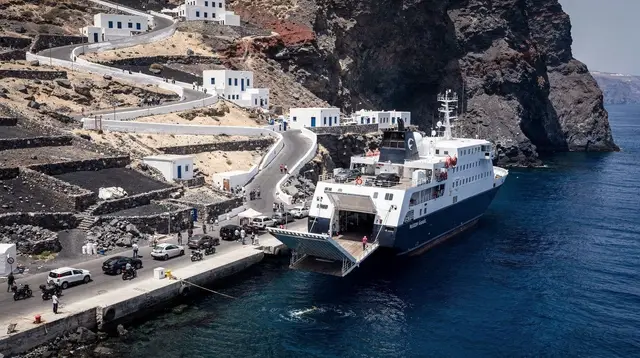
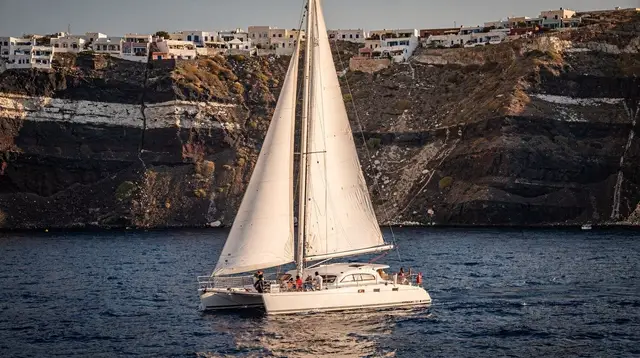
Boats are the clearest casualty. Caldera cruise operators run their heaviest schedules from June to September, taper through the shoulder months, and by December many boats are out of the water for maintenance rather than running to Nea Kameni and Palea Kameni. A handful of operators keep a limited winter timetable, more for local demand than tourists, but the wide daily choice of sunset and swimming cruises you would find in July simply does not exist in January. If a caldera cruise or a hot springs swim is the centrepiece of a winter trip, confirm an actual sailing date before booking anything else around it, rather than assuming one will be available.
| Category | Summer (Jun-Sep) | Winter (Nov-Mar) |
|---|---|---|
| Caldera hotels (Oia, Imerovigli) | Fully open, booked out | Large share closed |
| Fira hotels and shops | Fully open | Mostly open, reduced hours |
| Caldera-view restaurants | Multiple seatings a night | Many closed for the season |
| Caldera cruises (day and sunset) | Daily, many operators | Rare, weather-dependent |
| Nea Kameni volcano landings | Frequent | Largely paused |
| Ferries to Piraeus and the Cyclades | Frequent, multiple daily | Reduced, weather-cancelled more often |
| Flights to Athens and Europe | Daily, many routes | Athens routes daily, fewer direct European flights |
| Larger wineries (Santo Wines, Wine Museum) | Open daily | Generally open |
| Small family wineries | Open daily | Reduced hours, call ahead |
The Sunset, Without the Fight
The single biggest difference between summer and winter Santorini is what happens at the end of the day. In August, the Kastro terrace in Oia fills up ninety minutes to two hours before sunset, and finding a spot along the wall means arriving early and holding your ground. In January, that same terrace can be genuinely quiet: a few dozen people rather than a few hundred, with room to move and actually see the view rather than a wall of phones.
The trade is the sunset boat. Watching the sun drop behind the caldera from the water, looking back at the cliff instead of standing on it, is one of the better ways to see it in season, and it is the one experience winter mostly takes off the table, since sunset cruises are among the first sailings to stop once the season turns.
For anyone visiting between November and March, land-based viewpoints do the job instead: the Kastro in Oia, the quieter terraces of Imerovigli and Firostefani, or the walk out to Skaros Rock, all free, all open, and none of them requiring a booking. See Oia Sunset Without the Crowds and Best Sunset Spots in Santorini Beyond Oia for the full list of spots that work without a boat.
The sunset itself also moves. Where a June evening holds light until nearly 9pm, a late-December sunset falls around 5:15pm, which shortens the usable day and pushes dinner earlier for anyone planning around it.
Wine, Museums and the Indoor Day
Santorini’s wine industry does not run on tourist volume the way its restaurants and boats do, so it survives winter in better shape than most of the island’s other attractions. The larger estates built around a visitor centre, among them Santo Wines on the caldera rim and the Wine Museum in Vothonas, generally keep normal or near-normal hours through the season, since tastings, tours and retail sales continue regardless of the month. Smaller family producers are less predictable: some reduce their hours after the harvest finishes in late summer, others close for stretches of the deep winter, and a walk-in visit that works easily in July is a poor bet in February without calling first.
Winter is also, honestly, a better season for the island’s indoor sites than the height of summer. Akrotiri, the excavated Bronze Age town, sits under a bioclimatic roof and stays open regardless of weather, which makes it the natural plan for a rainy or windy day when a boat trip is off the table anyway. The Museum of Prehistoric Thera in Fira, holding the frescoes recovered from Akrotiri, works the same way. Neither site loses anything by being visited in January rather than July, and both come without the queues that build up in peak season.
a Santorini wine tasting experience based in Athens is worth knowing about too, for travellers who want the island’s Assyrtiko and Vinsanto on a winter trip that does not include Santorini itself, or as a way to taste before deciding whether a dedicated winter visit is worth planning.
Getting There and Getting Around
Flights to Athens run daily year-round, and connections onward from Athens keep Santorini reachable through the winter without much friction; it is the direct European routes that thin out or disappear once the northern summer ends, so most winter visitors connect through Athens rather than flying in directly. a day trip to Santorini from Athens is one way travellers test the island in the off season before committing to a longer stay, flying down and back in a single day.
Ferries are the less certain option in winter. The ferry guide covers routes and timing in detail, but the short version for this season is that the timetable thins out and rough Aegean weather cancels sailings with less warning than in summer, so anyone with a fixed onward flight should build in a spare day rather than book a ferry for the morning of a departure. The airport guide and general getting to Santorini overview both apply year-round, but treat their summer frequencies as a ceiling, not a guarantee, for a winter trip.
Once on the island, buses run a reduced winter schedule out of Fira, and taxis remain scarce all year, so arranging transfers in advance matters even more in the low season, when fewer of them are working at all.
Who Winter Actually Suits
A winter trip to Santorini rewards a particular kind of traveller: someone who wants the caldera itself, the walking, the wine and the quiet, more than the full activity list. The Fira to Oia caldera path is genuinely better in winter, walked without the summer heat and with the trail to yourself for long stretches. Photography works well too, since low winter light and empty view points remove the two biggest obstacles to a good caldera shot in July.
It suits couples and solo travellers looking for a slow, low-cost stay over a fixed list of boxes to tick. It does not suit anyone whose main goal is a caldera cruise, a swim at the Palea Kameni hot springs, water sports, or a night out on a lively strip, since all of those depend on infrastructure that mostly shuts down for the season. Families travelling with children who want beach time should also look elsewhere in the calendar: the sea is cold, several beach bars in Kamari and Perissa are closed, and the swimming season is firmly over.
For visitors who want some version of the sunset-cruise, wine-and-caldera experience but on a date they can fix well in advance, the practical answer is often to travel in the shoulder months instead. See Santorini in the Shoulder Season: Late April, May and October for how April-May and October compare, and The Best Time to Visit Santorini for how winter stacks up against every other stretch of the year. Neither claims winter is worse, only different, and the choice comes down to what a traveller is willing to trade.
Prices and Practicalities
The upside of all this closing and slowing down is cost. Hotel rates on the caldera, where they remain open, drop well below summer and even shoulder-season prices, and the handful of restaurants that stay open rarely need a reservation. a private villa stay set up for content and photography is one way some winter visitors take advantage of the lower rates and the empty caldera views, using the season’s quiet as the point rather than working around it.
Daylight is short, so plan a single caldera walk or one village visit per half-day rather than the packed itinerary that a long summer day allows. Layers matter more than sun protection: daytime temperatures in December through February typically sit around 12 to 15°C, with wind off the Aegean making it feel colder on exposed caldera-rim paths, and rain spells are common even though the island rarely sees prolonged storms. None of this is severe weather, but it is a real change from the heat that defines every summer photo of the island, and packing for a Greek winter island beats packing for a Greek summer beach.
For anyone weighing a winter date against safety concerns left over from the seismic activity of early 2025, it is worth being direct: that swarm, concentrated between Santorini and Amorgos, ended months ago with no eruption, and it has no bearing on whether winter is a sensible time to visit. See Santorini Safety and the 2025 Earthquakes for the full picture. The reasons to think carefully about a winter trip are closures and weather, not that event.
Winter in Santorini: Your Questions Answered
Is Santorini worth visiting in winter?
For the right traveller, yes. You get empty caldera paths, low prices and a slower pace, but you give up most sunset cruises, many restaurants, and some hotels. It suits people who want quiet over activity.
What closes in Santorini between November and March?
A large share of caldera hotels, restaurants and boat operators in Fira, Oia and Imerovigli shut for the season, along with several beach bars in Kamari and Perissa. Fira and the airport keep running year-round, just at reduced capacity.
Can you still watch the sunset from Oia in winter?
Yes, and it is far easier than in summer: the Kastro terrace that fills two hours ahead in July is often just a handful of people in January. The sunset itself moves much earlier, around 5:15pm at the end of December.
Are the caldera cruises still running in winter?
Some operators keep a reduced winter schedule, especially around milder weeks, but sunset and swimming cruises to Nea Kameni and Palea Kameni become unreliable once the meltemi season is well behind and boats go into maintenance. Always confirm a specific date before counting on one.
Is the ferry to Santorini reliable in winter?
Ferries keep running but on a thinner timetable, and rough Aegean weather cancels sailings with little notice more often than in summer. Flying is the steadier option for a fixed travel date.
Do the wineries stay open in winter?
The larger estates with visitor centres, such as Santo Wines and the Wine Museum, generally stay open year-round, while smaller family wineries reduce their hours or close between harvest and spring. Calling ahead replaces the walk-in visit that works in summer.
What’s the weather like in Santorini in winter?
Mild by northern European standards but genuinely wintry for the Aegean: daytime temperatures around 12-15°C, frequent wind and rain spells, and short daylight hours. It is a coat-and-layers island, not a beach island, from December to February.
Seasonal experiences on GetYourGuide
Verified deep-linked GetYourGuide tours. Book through these links and we earn a small commission at no cost to you.
GetYourGuide does not provide a product photo for this activity — the image shows the meeting point, photographed by us.