Where to Stay in Santorini: Caldera Villages or Beach Towns
Should I stay in a caldera village or a beach town in Santorini?
Caldera villages like Oia, Fira and Imerovigli sit on the cliff with sunset views but no beach access; beach towns like Kamari and Perissa sit on the sand but face away from the caldera. Most first-time visitors accept the trade-off rather than expecting one location to deliver both.
Two Very Different Islands to Choose Between
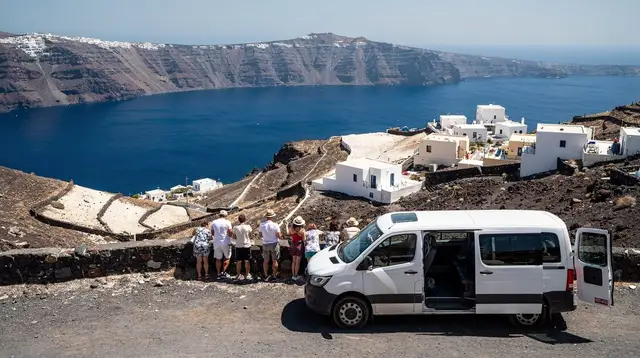
Santorini isn’t one coastline with different price points — it’s two separate experiences sharing one island. On the west side, the caldera rim carries the villages everyone recognises from photographs: white cubes stacked on a cliff, 250 to 300 metres above the water, looking out over the crater left by the Bronze Age eruption. None of them have a beach. On the east and south side, a lower, flatter coastline carries the actual sand — black and red, volcanic, and often uncomfortably hot underfoot by midday — around towns like Kamari and Perissa.
Picking where to stay in Santorini is really picking which of those two islands you want outside your door each morning, because moving between them daily eats into a short trip. This page works through both sides, plus the quieter inland option most visitors don’t consider, so you can match the choice to what you’re actually here for. If you’re still deciding how long to stay, that’s covered separately in how many days in Santorini, and overall costs are broken down in the budget guide — this page stays focused on location.
Life on the Caldera Rim
The caldera villages are the reason most people book Santorini in the first place, and staying in one means waking up to the view rather than driving to it. The trade-off is consistent across all of them: no beach, higher prices, and — in Fira and Oia especially — narrow pedestrian lanes that get genuinely crowded through the middle of the day.
Fira
Fira, the island’s capital, is the most practical caldera base. It sits closest to Athinios port and to the airport, has the widest choice of restaurants and shops, and is the hub for the KTEL bus network, so it’s the easiest village to be based in without a rental car. It also has real nightlife, which the other caldera villages mostly don’t. What it doesn’t have is calm: cruise-ship crowds fill the caldera-edge path from mid-morning, and the old port below, reached by cable car or the 588 steps, adds its own daily rush of arrivals.
Firostefani
Firostefani is Fira’s quieter neighbour, a level, ten-minute walk along the caldera path with the same sunset direction and noticeably less foot traffic. It’s a sensible middle ground for anyone who wants Fira’s convenience within reach but doesn’t want to sleep in the middle of it.
Imerovigli
Imerovigli sits at the highest point of the caldera rim, next to Skaros Rock, and has become the go-to answer for travellers who want an Oia-level sunset without booking a year ahead or fighting a crowd for a viewpoint. It’s quieter and more residential than either Fira or Oia, with fewer restaurants within walking distance, which suits couples more than groups wanting nightlife.
Oia
Oia is the village built around one thing — the sunset — and it delivers that better than anywhere else, at the cost of being the most expensive and most seasonal base on the island. Its Kastro fills 90 minutes to two hours before sunset in high season, restaurant tables need booking well ahead, and the walk down to Ammoudi Bay for dinner by the water is steep enough to plan for on the way back up.
Staying here means treating the sunset crowd as part of the deal, not a surprise. Several caldera-view properties around Oia and Imerovigli operate as private villas rather than hotels; for a self-contained stay with a pool facing the caldera, it’s worth comparing options like this private luxury villa stay in Santorini against a standard hotel room.
Accessibility on the Caldera Rim
None of the caldera villages are flat. Fira, Firostefani, Imerovigli and Oia are built along stepped, cobbled paths that follow the cliff edge, and pushchairs, wheelchairs and heavy suitcases all struggle on them. The only mechanised route between Fira and the water below is the cable car, running roughly every 20 minutes in high season for around €6 one way; the 588 steps beside it are the sole alternative, and neither option exists at Oia, Imerovigli or Firostefani.
Hotel access varies just as much as the terrain — some caldera-view rooms sit at the bottom of dozens of internal steps from the road, with no lift to reach them. Anyone travelling with a wheelchair, a pushchair or a mobility limitation should treat this as a filter on top of the caldera-versus-beach decision rather than an afterthought; the accessibility guide sets out which villages and room types are realistically manageable and which paths are worth avoiding altogether.
Life by the Sea: Kamari, Perissa and the South
The beach towns sit on the opposite coast, where the land is flatter and the volcanic sand — black at Kamari, darker still further south — actually reaches the water. None of it has the caldera view, and the trade-off runs the other way: lower prices, easier parking, and a beach at the end of your street instead of a half-day trip to reach one.
Kamari
Kamari sits directly beneath the cliff of Mesa Vouno, which shelters it from some of the wind and gives it a distinctive backdrop the flatter beach towns lack. It’s built up but manageable, with a promenade of tavernas facing the sea, decent family infrastructure, and easy access up to Ancient Thira on the ridge above.
Perissa and Perivolos
Perissa and Perivolos share the island’s longest stretch of black sand, running along the other side of Mesa Vouno from Kamari. Perissa is the busier, more built-up end; Perivolos, further along, leans younger and more nightlife-oriented in places, quieter in others. Both put you a genuine walk-out-the-door distance from the water, which no caldera village can offer, and both are well served by direct KTEL buses to Fira.
Vlychada and the Akrotiri Area
Further south and west, Vlychada is quieter still, known for the wind-carved cliffs behind its beach rather than nightlife, and sits close to Akrotiri and its covered Minoan site — a sensible base for anyone prioritising archaeology and calm over restaurants and bars. It’s less convenient for evenings out and for reaching the caldera villages without a car.
Wherever you land on this side of the island, remember the sand itself: it’s volcanic and gets genuinely hot underfoot by midday, so pack sandals for the beach, not just a towel.
The Quiet Middle: Inland Villages
Between the crowded cliff and the busy coast sits a third option most first-time visitors overlook: the inland villages, a short drive from both the caldera and the ferry port, at noticeably lower prices.
Pyrgos, with its old kastro climbing a hill in the island’s centre, is the single spot from which you can see across most of Santorini at once — including a distant caldera view without the Oia price tag. Megalochori is smaller and calmer again, wrapped around a quiet square and several of the island’s wineries. Emporio, with its own fortified citadel, and Karterados, a working village a few minutes outside Fira, both offer easy access to Fira’s restaurants and transport without Fira’s prices or crowds.
None of these put you on the caldera rim or on a beach — they’re a compromise, and a good one for a longer stay, a rental-car itinerary, or a visit built around wine and villages rather than sunset photographs.
Comparing the Options
| Base | View | Beach access | Price level | Best suited to |
|---|---|---|---|---|
| Fira | Caldera | None — cliff-top | High | First-timers wanting convenience and transport links |
| Firostefani | Caldera | None — cliff-top | High | Fira’s calm without leaving Fira behind |
| Imerovigli | Caldera | None — cliff-top | High | Oia-level sunset, fewer crowds |
| Oia | Caldera | None — cliff-top, steep path to Ammoudi | Highest | Couples prioritising sunset above all else |
| Kamari | Sea | Direct, black sand | Mid | Families wanting an easy walk to the beach |
| Perissa / Perivolos | Sea | Direct, black sand | Mid to low | Longer beach stays, budget-conscious trips |
| Pyrgos / Megalochori | Distant/none | None | Low to mid | Wine, quiet, and value on a rental-car trip |
| Karterados / Emporio | None | None | Low to mid | Fira’s convenience at village prices |
Getting Between the Two Sides
However you split your stay, moving between the caldera and the beaches means using the island’s limited transport rather than assuming a short taxi ride, because taxis in Santorini number only around thirty for the whole island and are typically pre-booked rather than hailed.
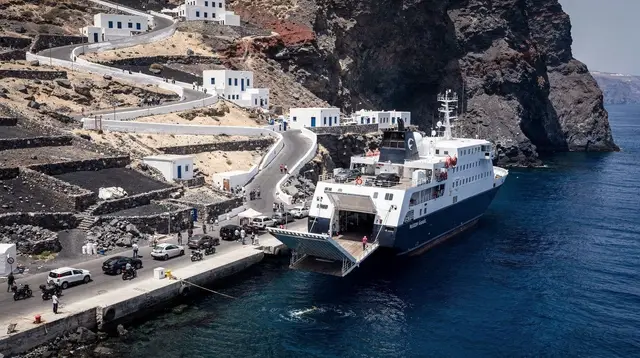
The KTEL bus network runs from Fira to both Kamari and Perissa reasonably often through the day in season, but services thin out by early evening — a relevant detail if you’re staying by the beach and want to catch the sunset from the caldera. Renting a car or scooter for a beach-town stay, or booking transfers in advance for a caldera stay, removes most of the friction either way; getting to Santorini covers arrival logistics from the airport and Athinios port in more detail.
Car, Scooter or ATV for a Split Stay
If you’re moving between the caldera and the beaches more than once or twice, self-driving usually works out cheaper than repeated taxis and faster than working around bus timetables. A small rental car typically costs €35 to €50 a day in high season, and a scooter runs €20 to €25; the trade-offs between the two, plus what to check before signing anything, are covered in the car and scooter rental guide. ATVs and quads are rented just as widely and usually cost less again, but Santorini’s narrow, gravel-edged roads and blind bends make them one of the more common causes of tourist injury on the island — worth reading the ATV and quad guide before booking one, whichever side of the island ends up being your base.
If your base is on the beach side and you’d still like to see the caldera without relocating for a night, a boat trip solves the geography rather than fighting it: cruises through the caldera typically depart from the old port below Fira or from Vlychada, giving you the cliff-top view from the water instead of from a hotel balcony.
A short outing like this boat trip covering some of Santorini’s best-known spots works well as a single day added to a beach-town stay, and a proper sunset cruise around the caldera gives you the view Oia is famous for without needing to book a room there at all. Divers based on the beach side are also close to some of the island’s better underwater sites; a guided diving tour is easy to fit around a Kamari or Perissa stay.
How to Decide
A few honest questions narrow this down faster than a list of pros and cons:
Is the sunset the main reason you’re here? If yes, a caldera village — Oia for the classic version, Imerovigli or Firostefani for a calmer one — is worth the higher price and the lack of a beach.
Do you want to actually swim most days without driving to do it? Then Kamari, Perissa or Perivolos will serve you better than any cliff-top address, whatever the photographs suggest.
Is this a short first visit and you want to see both sides? Splitting a stay — a few nights on the caldera, a few by the beach — is common precisely because neither side does what the other does. It costs a change of accommodation, not a wasted day, since the island is small enough that any base reaches most sights within an hour.
Are you working to a tighter budget or staying longer than a week? The inland villages — Pyrgos, Megalochori, Karterados, Emporio — cost less than either coast and still put you within a short drive of both, which matters more the longer the trip runs. For a fuller sense of what a caldera stay costs against a beach-town one, the budget guide breaks down accommodation alongside food and activities.
There’s no wrong answer here, only a mismatch between expectation and geography — the one mistake worth avoiding is assuming a caldera village comes with a beach, or that a beach town comes with the view. Once that’s clear, the rest is a question of budget and how many days you have to work with.
Trip-planning essentials on GetYourGuide
Verified deep-linked GetYourGuide tours. Book through these links and we earn a small commission at no cost to you.
GetYourGuide does not provide a product photo for this activity — the image shows the meeting point, photographed by us.