Travel tips for Santorini
Everything you need to know before visiting Santorini and the Cyclades — money, transport, the ferry crossings and when to go.
Planning essentials
Visas, budgets, packing, eSIMs and the cultural etiquette worth knowing before you land.

Accessibility in Santorini: What Limited-Mobility Travelers Should Know

First Time in Santorini: What to Know Before You Go

How Many Days Do You Need in Santorini?

Santorini on a Budget: What It Actually Costs

Santorini Safety and the 2025 Earthquakes

The Santorini Packing List Nobody Gives You

What to Book Ahead in Santorini (and What Sells Out First)

Where to Stay in Santorini: Caldera Villages or Beach Towns
Getting around
Hiring a car for Akrotiri and the south coast, and why the high-speed catamaran beats the slower conventional ferry for reaching the neighbouring Cyclades.

Athinios Port: Santorini's Only Ferry Gateway

Buses in Santorini: The Complete KTEL Guide

Getting to Santorini: Flights, Ferries and Which to Choose

Santorini Airport (JTR): Getting to Fira, Oia and Imerovigli

Santorini Cable Car and the 588 Steps: Getting Up From the Old Port

Santorini Taxis and Transfers
When to go
A high season from June to September, quieter shoulder months either side, and a wind that can pick up on Santorini almost any month. Month-by-month guides to what to expect.


Good to know about travel tips for Santorini
Greece has no island-specific entry rules beyond what applies to the country as a whole, but a handful of practical points shape every trip through Santorini. The official currency is the euro, and it is accepted everywhere on the island, from taverna bills to ferry tickets and quad rentals, with cards taken almost everywhere in Fira and Oia. Two arrival points serve the island: flights into Santorini's own airport (JTR), and the ferry route from Piraeus, near Athens, which calls at the port of Athinios below the inland villages — which one suits a given itinerary better often comes down to how much of the mainland is also on the plan.
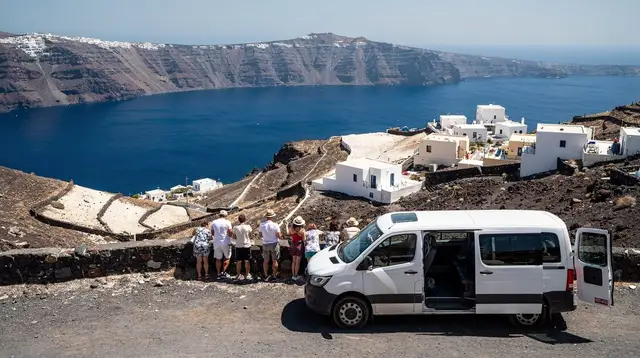
The high season runs from June to September, when the caldera path and the sunset spots at Oia are at their busiest; May and October sit either side as quieter shoulder months; and much of the island's hotel and restaurant scene closes for winter. Roads around the caldera rim wind along the cliff edge between the villages, and getting into Fira or Oia by car during the busiest parts of the day can be slower than the distance suggests, so a quad or a scooter often covers the same stretch quicker.
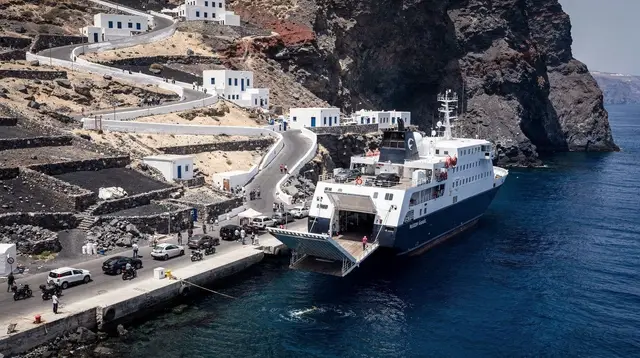
Ferries to Thirassia, to the volcanic islets and onward to the near, central and western Cyclades run to a published timetable rather than on demand, and schedules thin out sharply once the high season ends, so a return crossing is worth confirming before setting off rather than assumed. The Athinios port below the inland villages handles most of the inter-island and mainland ferry traffic, while the older port beneath Fira, reached by the cable car, serves the caldera cruises and the smaller boats out to Nea Kameni and Palea Kameni.
Frequently asked questions about travel tips for Santorini
Do I need a visa to visit Santorini and Greece?
Visitors from the EU, the UK, the United States and Canada don't need a visa for stays of up to 180 days. An onward or return ticket is checked at boarding, not just on arrival, so it's worth having proof ready.
What currency should I bring, colones or dollars?
The official currency is the euro, and it's accepted everywhere on Santorini, from hot-springs boat trips to ferry tickets, with cards taken almost everywhere in Fira and Oia.
Can I swim in the hot springs at Palea Kameni?
Yes — Palea Kameni's rust-coloured hot springs are reached by swimming out from the boat rather than walking in from a beach, and they're included on most Nea Kameni and hot-springs cruises from the caldera.
Which airport should I fly into for Santorini?
Santorini's own airport (JTR) sits a short hop from Fira, while flying into Athens and taking the ferry from Piraeus to Athinios is the alternative route. Which one suits an itinerary better often depends on whether Mykonos, Naxos or one of the other Cyclades is also planned.
Do I need to worry about snakes or mosquito-borne illness?
The fer-de-lance is occasionally encountered on forest trails, which is one reason guided night walks stay on marked paths with a flashlight, and dengue fever is present in the lowlands during the green season, so repellent after dusk is worth using.
Trip-planning essentials on GetYourGuide
Verified deep-linked GetYourGuide tours. Book through these links and we earn a small commission at no cost to you.
GetYourGuide does not provide a product photo for this activity — the image shows the meeting point, photographed by us.