Prices, Tipping, and What Things Actually Cost
I didn’t expect to be standing at the base of a volcano crater, wallet in hand, wondering if I had the right coins on me. That’s the thing about Santorini’s costs — the big ones are easy. You book a hotel, you book a boat, you see the number, you pay it. It’s the small ones that sneak up, usually in cash, usually at the exact moment you’ve left your wallet in the cabin or spent your last five-euro note on a bottle of water.
This isn’t a full pricing breakdown — the honest, current numbers for each activity live on the things to do in volcano and hot springs page and the transport guide, because they shift with the season and the operator faster than any single article can keep up. What I want to do here is just tell you where the surprise costs actually hide, so you’re not caught out the way I was.
The volcano fee nobody mentions upfront
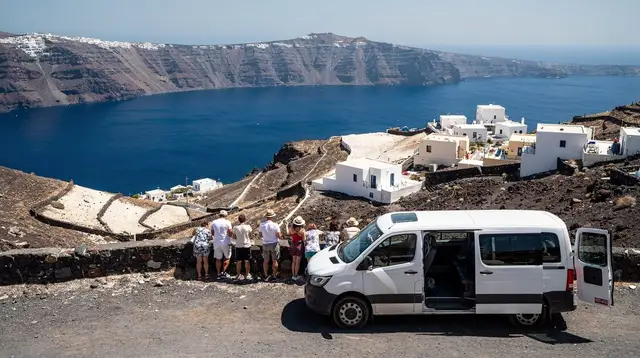
Every caldera cruise worth taking stops at Nea Kameni, the black cone in the middle of the bay, so you can walk up to the crater rim. What most listings don’t spell out clearly is that the landing fee — on the order of €5 — is almost never included in the price of the cruise itself. You pay it in cash, at a little booth on the island, before you start the walk up. I’ve read the fine print on more than one booking page since, and it’s usually there, just in a sentence you’d skim past. My guide to the volcano itself has more on the walk and what to expect; the point here is simpler: keep a five-euro note aside and don’t assume it’s covered.
The same logic applies a level over, on Palea Kameni, where you swim rather than land — no entry fee there, but bring an old swimsuit, because the iron-rich water stains light fabric in a way that doesn’t wash out. That one’s a lesson best learned from someone else’s laundry, not your own; the hot springs guide covers it properly.
If you’re weighing a standard day cruise around the caldera against something more comfortable, a smaller, higher-end caldera cruise sometimes folds the Nea Kameni fee into the ticket. It’s worth a direct question before you book rather than an assumption either way — see my comparison of volcano tours for how the options actually differ.
The cable car, the steps, or the donkey
Getting from the old port of Fira up to the town above involves a choice: the cable car, the 588 steps, or a donkey. The cable car is quick — a few minutes instead of a sweaty half hour — and I’ve seen it priced anywhere from around €6 to €10 depending on the year and where you look. That range isn’t me being vague for the sake of it; it genuinely moves, and I’d rather tell you to expect variation than hand you a number that’s wrong by the time you read this.
Cash works best at the ticket booths at both ends. If you’d rather skip the debate entirely, walking down is free and the steps make for a decent way to see the cliff face up close, donkeys included, whether you ride one or just step around them.
The cruise levy you won’t see on your invoice
If you’re arriving by cruise ship rather than ferry or plane, there’s a per-passenger levy that applies to Santorini and Mykonos specifically, higher than at most other Greek ports. It’s not something you pay at a booth — the cruise line collects it on your onboard account, and the amount is higher in the summer months, lower in spring and autumn, and lowest in winter.
You won’t notice it unless you check your final onboard statement, so it’s worth knowing it exists rather than being surprised by the line item. My cruise port guide and the piece I wrote on what the levy actually changed go into more of the reasoning behind it, including the daily cap on cruise passengers that now applies to the island.
The nightly tax at check-in
Almost every hotel and rented room in Greece adds a small per-night accommodation tax, paid directly to the property rather than through your booking site. It’s not unique to Santorini, and it’s not hidden exactly — it’s usually mentioned somewhere in your confirmation email — but it’s easy to forget until reception asks for cash at check-in. I’d rather flag the principle than guess at a number that varies by category of accommodation and changes from one year to the next.
Cash, cards, and what actually needs coins
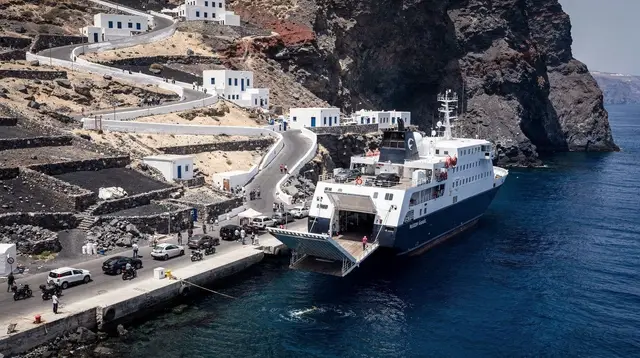
Cards are accepted almost everywhere that matters — restaurants, most shops, most hotels. Where cash still rules is the short list of things above: the Nea Kameni fee, the cable car, tips, and the odd small taverna in a village that just hasn’t bothered with a card machine. Taxis are scarce enough on the island that most drivers expect cash too, and if you’re relying on the ferry from Athinios port, having a little cash for a coffee while you wait saves you hunting for a machine in a queue.
Tipping itself is not the fraught topic it can be elsewhere. Rounding up a taxi fare, leaving a couple of coins on a taverna table for good service — that’s normal, appreciated, and never demanded. I don’t think anyone here expects a percentage calculated to the cent.
My rule for budgeting a day
Whatever the big-ticket items on my itinerary — a sunset cruise along the caldera or a quieter evening tour of the island’s best viewpoints — I now set aside a flat twenty euros in small notes and coins before I leave the room. It covers the volcano fee, a cable car ride, a coffee, and a tip, with room to spare.
It’s a small habit, but it’s the one thing that’s stopped me standing at a crater rim doing mental arithmetic instead of looking at the view. For a fuller sense of what a whole trip costs beyond these pocket expenses, my Santorini budget guide walks through the bigger numbers — accommodation, food, and the tours themselves.
Common questions about prices and tipping in Santorini
Is the Nea Kameni volcano entry fee included in the cruise price?
Usually not. Most caldera cruises and boat trips get you to the island but leave the landing fee, on the order of €5, for you to pay in cash once you’re ashore. Always ask the operator when booking rather than assuming it’s bundled.
How much does the Fira cable car actually cost?
I’ve seen it quoted anywhere from about €6 to €10 depending on the season and where you check, and it changes from year to year. Bring cash to the ticket window at the top or bottom station rather than counting on a card machine working.
Is there a tourist tax when I check into a hotel in Santorini?
Yes, a per-night accommodation tax applies across Greece and is paid on the spot, usually in cash, separate from your booking total. It’s a fixed principle rather than a fixed number, since it depends on the category of accommodation.
What is the cruise passenger levy and who actually pays it?
It’s a per-passenger charge on cruise arrivals to Santorini that the cruise line collects on your onboard account, not something you hand over at the port. The amount changes with the month, higher in summer and lower outside peak season.
Do I need to tip in Santorini?
Tipping isn’t obligatory the way it can feel in some countries. Rounding up a taxi fare or leaving a small amount for good service in a taverna is normal and appreciated, but nobody will chase you down for it.
How much cash should I actually carry each day?
Enough to cover a couple of small entry fees, a cable car ticket, and a coffee or a snack — cards cover almost everything else, restaurants included. It’s the pocket-sized payments, not the big ones, that catch people out here.
Trip-planning essentials on GetYourGuide
Verified deep-linked GetYourGuide tours. Book through these links and we earn a small commission at no cost to you.
GetYourGuide does not provide a product photo for this activity — the image shows the meeting point, photographed by us.