Stargazing in Santorini After Sunset
Where's the best place to stargaze in Santorini?
Profitis Ilias, the island's highest point at 567 metres, sits well above the light glow of Fira and Oia and gives the darkest sky on Santorini. Clear conditions depend on the season and the meltemi wind, so no night is guaranteed to be cloud-free. The last KTEL buses leave Fira in the early evening, so arrange a taxi or rental car for the return.
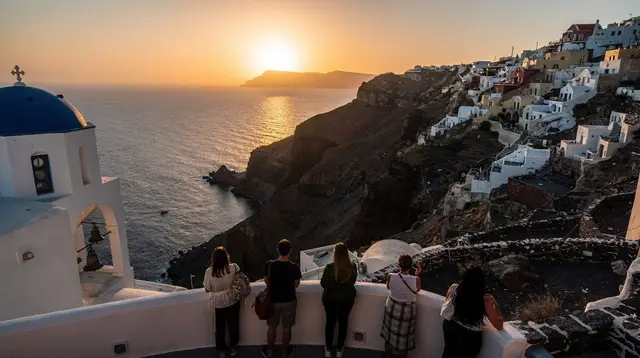
Once the sun has dropped behind Thirassia and the crowd at Oia starts filtering back toward the bus stop, most visitors call it a night. That’s the gap this page is for. It doesn’t cover the sunset itself — for that, see the best sunset spots beyond Oia or how a sunset cruise compares to watching from land. This is about what comes after: driving inland, away from the strings of café lights along the caldera rim, up to the one place on the island genuinely dark enough to see stars properly.
Why Profitis Ilias Wins After Dark
Santorini’s caldera villages are strung along a narrow ridge, and every one of them — Fira, Firostefani, Imerovigli, Oia — throws light straight up into the sky they’re famous for looking out over. It’s a strange irony: the view that draws people to the caldera at dusk is also what ruins the view after dark. To actually see stars, you need to put distance and, ideally, altitude between yourself and that string of lights.
Profitis Ilias is the answer. At 567 metres, it’s the highest point on the island by a wide margin, crowned by an 18th-century monastery and a scattering of telecom masts that are, if nothing else, a useful landmark in the dark. It sits inland, above Pyrgos and away from the caldera edge, so the worst of the village glow is below and behind you rather than filling half the horizon. On a clear night the difference from standing in Fira is immediate: more stars, sharper edges, and — if the moon cooperates — a visible band of the Milky Way overhead.
It isn’t a managed viewpoint. There’s no platform, no signage about stargazing, no facilities open at night. What you get is a quiet summit, the shape of the monastery against the sky, and the sea somewhere below on both sides of the island. That’s the appeal and also the reason to come prepared.
Getting There Once the Buses Have Stopped
This is the detail that catches people out. The KTEL bus network is genuinely useful during the day — routes fan out from Fira to Oia, the beaches, and the villages — but the timetable thins out fast after early evening and stops altogether well before a reasonable stargazing hour. If your plan is sunset in Oia followed by a drive up Profitis Ilias, you cannot assume a bus will get you either there or back.
That leaves two options. Renting a car or scooter gives you the most flexibility, but read up on what driving in Santorini actually involves first — the road up to the summit is paved but narrow, unlit, and switchbacked, which is a different proposition after dark than in daylight.
A scooter is fine for the caldera path in the afternoon; it’s a worse idea for a cold, unlit mountain road at night. The other option is a pre-booked taxi. Santorini’s taxi fleet is small — around thirty cars for the whole island — so turning up and hoping to flag one down from a mountaintop at 11pm doesn’t work. Book the driver in both directions before you go, or arrange a fixed pickup time.
If you’re staying somewhere with your own car, the drive from Fira to Profitis Ilias takes well under half an hour. From Oia it’s closer to 40 minutes, which is worth factoring in if stargazing is a same-evening add-on after watching the sunset there.
What the Sky Actually Looks Like
On a genuinely clear, moonless night, Profitis Ilias delivers a proper dark-sky experience by Aegean standards: a dense scatter of stars, the Milky Way visible as a pale band overhead in summer, and enough contrast to pick out constellations without a phone app doing the work for you. The monastery buildings and the antenna masts break up the horizon but don’t add meaningful light pollution of their own once you move a short distance from the car park.
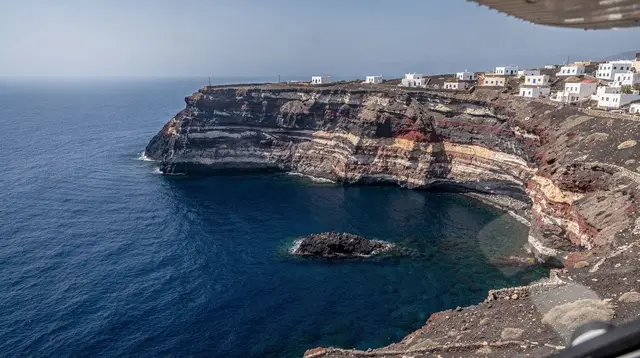
What you won’t see is anything volcanic. It’s tempting, looking out toward the black shapes of Nea Kameni and Palea Kameni in the caldera below, to expect some kind of glow. There isn’t one — Santorini’s last eruption was in 1950, and the volcano is dormant, not smouldering. What you’re looking at from the summit at night is silhouette against starlight and the scattered lights of Fira and the caldera villages far below, not lava.
| Season | Sky darkens by (approx.) | Conditions to expect |
|---|---|---|
| Late June – July | ~9:30–10pm | Warm, dry, meltemi more likely, sky can haze over |
| August | ~9pm | Peak meltemi season, clear spells common but windy |
| September – October | ~8–8:30pm | Milder wind, often the most reliable clear nights |
| November – March | ~6–7pm | Fewer people, cold and exposed at altitude, some venues along the way closed |
These are rough guides, not promises — actual darkness depends on the moon phase as much as the season, and a full moon will wash out all but the brightest stars regardless of how far you’ve driven from Fira.
Other Dark Corners of the Island
Profitis Ilias is the clear first choice, but it isn’t the only option, and it isn’t always practical if you don’t have a car or a booked taxi. A few alternatives, in rough order of how dark they actually get:
| Spot | How dark | Getting there |
|---|---|---|
| Profitis Ilias summit | Darkest on the island | Car or pre-booked taxi only |
| Inland villages (Megalochori, Emporio, Vothonas) | Noticeably darker than the caldera rim | Short drive from Fira |
| Perissa / Kamari beach roads | Moderate — some resort lighting | Bus or taxi, runs later than caldera routes |
| Imerovigli / Skaros Rock | Some caldera-village glow, but views over the sea | Walkable from Imerovigli |
If a trip up Profitis Ilias doesn’t fit the evening, stepping just a few streets back from the caldera edge in Megalochori or Emporio still beats trying to see stars from the middle of Fira or Oia.
Weather, the Meltemi and Honest Expectations
No page about the night sky should promise a guaranteed clear one, and this is where it’s worth being direct: Santorini’s weather, and particularly the meltemi wind, makes stargazing a some-nights-better-than-others activity, not a sure thing. The meltemi blows strongest from July into August and can bring haze, thin cloud, or simply enough wind to make standing on an exposed 567-metre summit unpleasant, even in the middle of summer. Check Santorini’s weather by month before you build a whole evening around it, and have a backup plan — dinner in Pyrgos, a slower walk back through the village — for a night that turns cloudy or gusty.
It’s also worth a brief word on the island’s geological history, since it comes up whenever people talk about Santorini after dark: the seismic swarm that began in January 2025 was widely reported and did lead to a temporary local state of emergency, but it ended without an eruption, and by 2026 it’s a closed chapter rather than an ongoing concern. It has no bearing on whether it’s sensible to be on Profitis Ilias at night — the mountain isn’t volcanic ground, and there is no elevated risk tied to a clear evening up there. For more on that episode and what it did and didn’t mean, see Santorini safety and the 2025 earthquakes.
What to Bring and How Long to Stay
Profitis Ilias is genuinely cold and windy at altitude after dark, even when Fira down below still feels like a warm evening. Bring a layer you’d otherwise think unnecessary in July — a light jacket or fleece makes the difference between an hour of comfortable stargazing and a rushed five minutes back in the car. A torch or a phone flashlight is useful for the unlit path around the monastery grounds; there’s no ambient light to walk by once you’re away from your car’s headlights.
Most people find 30 to 45 minutes at the summit is enough — long enough for your eyes to adjust properly to the dark (that alone takes 15–20 minutes) and take in the view, short enough that the wind and the temperature don’t become the main memory of the trip. If you’re driving, bring water and make sure your phone has enough charge to handle the drive back down; signal near the summit can be patchy.
Combining Stargazing with an Evening Out
For most visitors, the practical version of this evening starts in Oia at sunset and only afterward heads for the dark sky. If you’d rather have the sunset part of the evening organised for you, a private sunset tour that ends down at Ammoudi Bay leaves you free to arrange your own transport up to Profitis Ilias afterward, without having to plan the Oia crowds yourself.
If you’d rather spend the last light of the day walking Oia’s streets with some context on the village before heading off to find the dark, an Oia cultural highlights walking tour timed around sunset covers that ground on foot.
Photographers weighing up whether to spend the evening chasing sunset shots or getting set up for night photography sometimes split the difference: a shorter 1.5-hour photography session in Oia village earlier in the evening leaves enough daylight and time afterward to drive inland and still catch full darkness on Profitis Ilias. None of these tours go up the mountain itself — there’s no organised stargazing excursion on the island — but they’re a practical way to structure the earlier part of an evening that ends with a dark, quiet summit instead of a crowded viewpoint.
If you’d rather skip the drive back into town altogether, staying somewhere in Pyrgos or one of the inland villages shortens the trip up to Profitis Ilias considerably and makes a spontaneous, weather-dependent night out for stars much easier to pull off than it would be from Oia.
Stargazing in Santorini: Common Questions
Is Profitis Ilias open at night?
The monastery itself keeps daytime hours, but the summit and the access road aren’t gated, so visitors do go up after dark for the view. There’s no ticket booth or night-time facility up there, so bring a torch and let someone know your plan.
How do I get up to Profitis Ilias after sunset without a car?
There’s no public transport up the mountain, and the KTEL buses that radiate from Fira stop running in the early evening. A taxi booked in advance, or a rental car, are the only realistic options once the buses are done for the day.
Can I see the Milky Way from Santorini?
On a clear, moonless night away from Fira and Oia, yes. Profitis Ilias and other inland spots away from the caldera villages give a dark enough sky, though haze, moonlight, or the meltemi bringing in cloud can wash it out on any given night.
Does the meltemi wind affect stargazing?
Yes. The meltemi, strongest from July to August, can bring cloud and haze that dims the sky, and it makes an exposed summit like Profitis Ilias cold and blustery even in summer. Check the forecast rather than assuming a clear night.
Is Nea Kameni’s volcano visible at night from Profitis Ilias?
You can make out the dark shape of the caldera islets against the sea, but there’s no visible lava. Santorini’s last eruption was in 1950, so what you’re looking at is silhouette and starlight, not glow.
What should I bring for stargazing on Profitis Ilias?
A warm layer even in summer, since it’s exposed and breezy at 567 metres, a torch or phone light for the unlit road and paths, water, and a fully charged phone, as reception can be patchy near the summit.
Is it safe to drive up Profitis Ilias at night?
The road is paved but narrow, unlit, and switchbacked, so it suits a confident driver taking it slowly. A scooter isn’t the best choice for this particular trip, given the dark, the cold at altitude, and the lack of lighting.
Sunset Experiences on GetYourGuide
Verified deep-linked GetYourGuide tours. Book through these links and we earn a small commission at no cost to you.
GetYourGuide does not provide a product photo for this activity — the image shows the meeting point, photographed by us.