Vinsanto: The Santorini Wine You Take Home, Not the One You Taste On-Site
What is Vinsanto and is it the same as Santorini's dry white wine?
Vinsanto is Santorini's sweet dessert wine, made from sun-dried (passerillage) Assyrtiko, Aidani and Athiri grapes and aged for years in oak. It is not the same as the island's everyday dry Assyrtiko, and it is a different process entirely from Nykteri, which is a dry wine vinified at night.
The bottle to pack, not the glass to finish
Most visitors meet Vinsanto for the first time at the end of a tasting flight, poured last, in a small glass, next to a plate of loukoumi or a slice of melopita. It tends to get treated as an afterthought — the sweet pour after the “real” wine. That is a mistake, and it is also backwards. Vinsanto is not a lesser cousin of Santorini’s dry Assyrtiko. It is a completely different wine, made by a completely different process, and it is very often the single bottle worth carrying home in your suitcase from a trip to the The Santorini Wineries.
This page is written for that purpose: not for choosing what to sip during a wine tasting, but for understanding what you’re buying, why it costs what it does, and which producers make a version worth the extra weight in your bag. If you’re comparing dry whites, that’s a separate conversation — see Assyrtiko Explained for the grape that dominates the island’s everyday wine, and Santorini Wine Tasting: Understanding Kouloura Vines and PDO Santorini for how to plan a tasting session itself. Here, the question is simpler: what is Vinsanto, and which bottle do you take with you?
What Vinsanto actually is
Vinsanto is a sweet dessert wine made almost entirely from grapes grown on Santorini — chiefly Assyrtiko, with Aidani and sometimes Athiri blended in. The defining step happens before the grapes are ever pressed: bunches are laid out on rooftops, straw mats or wire racks and left in the sun for one to two weeks. This is passerillage, sun-drying, and it does the opposite of what most winemaking tries to do — it deliberately dehydrates the fruit, concentrating its sugars until what remains is closer to a raisin than a grape.
Only after this drying does pressing happen. What comes out is a thick, intensely sweet must that ferments slowly, often stalling naturally before all the sugar converts to alcohol — which is exactly why the finished wine stays sweet rather than turning dry. The wine is then aged in oak barrels, by law for a minimum of two years to carry the PDO Santorini designation, though the better bottlings spend four years or more in barrel. That oxidative aging is what gives good Vinsanto its color — deep amber, sometimes closer to mahogany in older examples — and its nutty, dried-apricot, walnut-skin character.
None of this happens by accident or overnight. A bottle of Vinsanto you buy today may represent grapes picked several vintages ago. That is part of what you are paying for, and part of why it makes sense as a gift or a bottle to lay down rather than one to open on the terrace that same evening.
Why this isn’t the same wine as the dry Assyrtiko you tasted
It’s an easy mix-up, because both wines can come from grapes grown in the same vineyard, sometimes by the same producer, in the same year. But the resemblance stops there.
Santorini’s standard Assyrtiko is fermented dry, unoaked in most cases, and built around bracing acidity that survives the island’s heat — it is the wine you drink with grilled fish or on a terrace at sunset, cold, within a year or two of the vintage. Vinsanto starts from the same grape but takes the opposite path at every step: dried rather than pressed fresh, fermented into sweetness rather than dryness, aged for years in wood rather than bottled young. Ordering “the Santorini white” and expecting Vinsanto, or the reverse, is the single most common confusion in a tasting room on this island, and it is worth clearing up before you buy anything.
Vinsanto vs. Nykteri: a different confusion entirely
There’s a second wine on the island whose name gets tangled up with Vinsanto for a completely unrelated reason: Nykteri. The two could not be more different, but the name alone makes people assume some kinship.
Nykteri means “of the night” in Greek, and it refers to a dry white wine — again usually Assyrtiko-based — that is traditionally harvested and pressed at night, when temperatures are lower, to protect the delicate aromatics of the grape from the heat of a Santorini day. It is typically aged briefly in oak, giving it more body and roundness than the standard dry Assyrtiko, but it remains a dry wine through and through, meant to be served chilled with food.
Vinsanto shares none of that. It is sweet, it comes from dried rather than fresh-pressed grapes, and its oak aging runs for years, not months. The only real link between the two wines is geography and grape variety — both can be made from Assyrtiko grown on the same volcanic soil. If you want the full picture on Nykteri and how the island’s dry wines are made, that’s covered in Assyrtiko Explained; this page stays focused on the sweet side of the cellar.
Reading a Vinsanto label before you buy
A few things on the label, or that a tasting-room host can tell you, are worth checking before you commit to a bottle:
| What to check | Why it matters |
|---|---|
| Grape blend | Pure Assyrtiko tends to be more mineral and taut; blends with Aidani often read softer and more floral |
| Years in oak | Two years is the legal minimum for PDO Santorini; four-plus years usually means deeper color and more oxidative, nutty character |
| Vintage | Older vintages aren’t automatically better, but a producer proud of aging will usually print the year clearly |
| PDO Santorini designation | Confirms the grapes were grown on the island and the wine meets the appellation’s minimum aging |
| Bottle size | Vinsanto is commonly sold in half-bottles (375ml), which suits its role as a sipping wine rather than an everyday pour |
None of this requires expertise to check — it just requires knowing to look, which most visitors don’t, because they meet the wine at the end of a tasting flight rather than at a shelf where they’re choosing what to buy.
Where to taste it before you decide
The honest way to choose a bottle is to taste more than one side by side, since sweetness levels, oxidation and oak character vary noticeably between producers. A guided wine tasting with a local guide is the simplest way to do that comparison in one sitting, usually across several wineries, with someone who can explain what’s different about each pour rather than leaving you to guess.
If you’d rather structure the afternoon around sunset itself, the sunset wine tasting combines a caldera view with a flight that typically finishes on a dessert wine — a good low-pressure way to meet Vinsanto before deciding whether to buy a bottle. For a shorter, more self-directed option, the wine museum tasting with audioguide at the underground museum in Vothonas pairs the tasting with the history of how these wines have been made on the island for centuries — useful context for understanding why passerillage exists at all.
For the full landscape of who makes what, Santorini Wineries Compared: Which One to Visit lays out the island’s main producers side by side. Two names come up constantly in Vinsanto conversations specifically: Santo Wines, the island’s largest cooperative, whose Vinsanto is widely available and consistent, and Venetsanos, whose caves above the Athinios port are among the oldest wine-production buildings on the island and worth visiting for the setting alone as much as the pour. Guides to both are at Visiting Santo Wines: Santorini’s Caldera-View Winery and Venetsanos Winery: Santorini’s Oldest Cellar Above Athinios Port, covering hours, what a visit costs, and how to book ahead.
Smaller producers worth seeking out for their Vinsanto specifically include Gavalas, Estate Argyros and Domaine Sigalas near Oia — each ages differently, and tasting all three against a Santo Wines bottling is a fast education in how much a producer’s hand shapes the final wine. The The Koutsoyannopoulos Wine Museum in Vothonas is also worth a stop for the historical context on winemaking here, separate from any single producer’s tasting room.
The vines behind the bottle
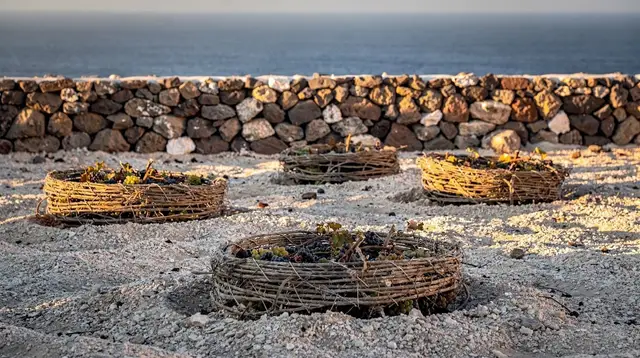
It’s worth understanding, briefly, what makes this wine possible at all, because it isn’t incidental to the story you’re buying into. Santorini gets no meaningful rainfall and has no rivers, springs or usable groundwater — the vines survive entirely on nighttime dew and sea humidity. To capture that moisture and shield the grapes from the island’s strong winds, growers train vines into kouloura, a low basket-woven coil resting directly on the volcanic soil rather than trained upward on wires or posts. It’s the most distinctive sight in the island’s vineyards after the caldera itself, and every grape that goes into a bottle of Vinsanto grew this way, unirrigated, in soil that is mostly volcanic ash and pumice.
Harvest on Santorini also happens unusually early by European standards, often starting in late July or August, well ahead of most wine regions. For Vinsanto specifically, that early harvest matters because the grapes destined for drying are picked at a point where their sugar and acid balance suits weeks of dehydration in the sun rather than immediate pressing.
Serving it once you’re home
Vinsanto is meant to be sipped, not gulped — a small glass, on its own or alongside something not too sweet itself: hard cheese, walnuts, dark chocolate, or the traditional pairing of melopita, a Greek honey-and-cheese pie. It does not need to be served ice-cold the way the dry Assyrtiko does; a slight chill or even room temperature suits it better, letting the caramel and dried-fruit notes show.
One practical point that makes it a genuinely good travel purchase: Vinsanto’s high sugar and alcohol content make it far more stable than a dry white once opened, holding its character for weeks rather than days, and it tolerates the heat and jostling of a checked suitcase better than almost any other Greek wine you could bring home. Pack it upright, wrapped in clothing, and it will survive the trip without special handling.
If you’re building a broader food itinerary around the wine, the pairing question extends into the island’s savory side too — see Santorini Food and Wine: An Island Primer for the wider picture, and Fava and Tomatokeftedes: Santorini’s Two Signature Dishes for the two dishes most often served alongside a tasting flight before the Vinsanto ever reaches the table. A tasting that ends with cheese rather than dessert works just as well — the Greek cheese tasting experience is built around exactly that combination, hard cheeses set against a sweet pour.
Planning the visit around it
If Vinsanto is the reason you’re organizing a winery stop at all, it’s worth building the day around tasting rather than squeezing it into a sunset viewpoint stop. The Two Days on Santorini’s Wine Route: Assyrtiko, Pyrgos and Megalochori lays out a full day structured around two or three wineries with time to actually compare pours, rather than one rushed stop. For travelers who’d rather set their own pace and route, a fully customizable tour lets you name specific wineries — useful if you already know from Santorini Wineries Compared: Which One to Visit which producers you want to taste against each other.
Most of the wineries with a Vinsanto worth seeking out sit inland, around pyrgos, Exo Gonia and vothonas, away from the caldera villages — a short taxi or rental car ride rather than a walk, and worth factoring into timing if you’re combining it with other stops that day. The broader Things to do at the Santorini wineries page covers the full range of tasting options across the island if a single producer visit isn’t enough.
The bottle worth the extra weight
Every visitor to Santorini comes home with photographs of the caldera. Fewer come home with a bottle that actually explains something about the island — its lack of water, its wind-battered vines, its centuries-old habit of turning scarcity into a distinctive wine. Vinsanto does that. It isn’t the wine to order with dinner on the island; it’s the one to set aside, carry home carefully, and open months later with people who weren’t there, as a way of explaining what the place actually tasted like.
Wine Tasting on GetYourGuide
Verified deep-linked GetYourGuide tours. Book through these links and we earn a small commission at no cost to you.
GetYourGuide does not provide a product photo for this activity — the image shows the meeting point, photographed by us.