A 3-Day Santorini Photography Itinerary for Light, Not Lines
Why This Route Skips the Front Row
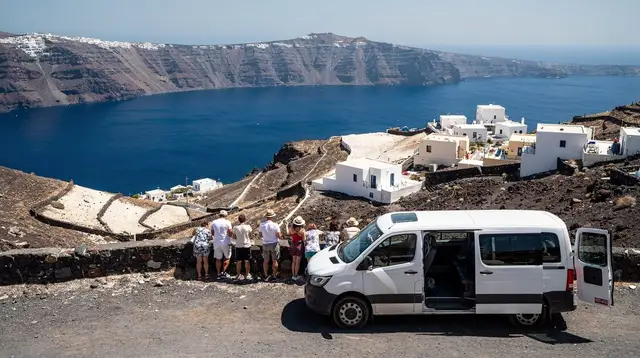
Most Santorini photo itineraries send you to the same wall at the Oia castle an hour before sunset, elbow to elbow with two hundred phones. This one doesn’t. It’s built around where the light actually falls well, not where the crowd already is — Imerovigli and Skaros Rock for sunset with room to move, the ash cliffs of Vlychada Beach for a texture you won’t find anywhere else on the island, and Pyrgos, the single village positioned to see the whole caldera, the south coast and the volcanic islets in one frame.
Three days is enough to work a handful of locations properly instead of ticking off a dozen badly. This plan doesn’t cover wine estates in any depth — the Santorini wine itinerary does that better — and it isn’t built around beach days with children, which the Santorini with kids itinerary handles instead. What follows assumes you’re moving on foot, by bus and by the odd taxi; a rental isn’t necessary, though it makes the early mornings easier.
Day 1: Imerovigli, Skaros Rock and an Honest Look at Oia
Start in daylight, not at dusk. Base yourself in or near Imerovigli and use the morning to walk the section of the Fira-to-Oia caldera path that runs past Firostefani and up to Skaros Rock — this stretch is paved and easy, and by mid-morning the light is flat enough to scout compositions without fighting glare. Skaros itself, the bare volcanic outcrop that once carried a Venetian fortress, gives an unobstructed view down the caldera wall toward Oia without a single tour group in the frame.
Come back for sunset. This is the piece of advice worth repeating: the Oia castle fills ninety minutes to two hours before sunset in high season, and by the time the sky actually turns, you’re photographing the backs of other people’s heads. Imerovigli’s terraces and the path out to Skaros give the same caldera light with a fraction of the crowd — see Oia sunset without the crowds and best sunset spots beyond Oia for exact vantage points.
If you do want Oia itself, go for the late afternoon walk through the village rather than the sunset scramble, or book a guided evening that’s timed to get you in and out with intent — a private sunset photo walk through Oia, with a short video reel included, is built for exactly this problem: it moves you to spots as the crowd builds rather than leaving you to find them cold.
For blue hour, don’t rush back down. The lights coming on across the caldera villages, seen from Imerovigli looking toward Fira and Firostefani, are a stronger shot than most people leave the island with.
| Time | Location | Why |
|---|---|---|
| Morning | Firostefani to Skaros Rock | Flat light, easy path, empty frames |
| Midday | Imerovigli village | Whitewash and blue domes without backlighting |
| Sunset | Skaros Rock or Imerovigli terraces | Same view as Oia, a fraction of the people |
| Blue hour | Imerovigli looking north | Village lights over the caldera |
Day 2: Vlychada’s Ash Cliffs and the South
Day two moves away from the caldera entirely. Vlychada Beach sits on the south coast, and its wind-sculpted ash cliffs are the most photogenic geology on the island that almost nobody photographs — pale, ridged, almost lunar, and best worked in the low side-light of morning or late afternoon rather than the flat glare of midday. The Vlychada Beach guide has the access details; bring shoes you don’t mind getting dusty, since the volcanic sand and ash underfoot burns by midday and isn’t kind to bare feet in any season.
Use the middle of the day for something under cover, since harsh midday sun is the worst light of the whole trip for outdoor work. Akrotiri’s excavation site, walked beneath its bioclimatic roof, gives you controlled, even light and a genuinely different subject — ash-buried Bronze Age walls rather than whitewash and blue domes — and it’s a smart hedge against a windy or overcast stretch, which the meltemi makes more common in July and August than most visitors expect.
Head back toward the caldera for the evening and give Skaros or Imerovigli a second look under different sky conditions — clouds, haze and moon phase change the shot night to night, and a repeat visit from a slightly different angle often outperforms the first. If you’d rather have the caldera do the work for you, a private sunset tour down to Ammoudi Bay below Oia puts you at sea level looking up at the cliffs and the sky at once, a genuinely different composition from anything shot on the rim.
Day 3: Pyrgos and the View That Took the Least Effort
Save the easiest, highest-value shot for last. Pyrgos, the hilltop kastro village in the island’s interior, is the only point on Santorini from which you can see essentially the whole island — the caldera to the west, the volcanic islets, the south coast, and on a clear day the neighbouring islands offshore. It draws a fraction of the visitors that Oia or Fira do, and its narrow stone lanes and blue-shuttered houses photograph just as well without the queue. The Pyrgos village guide covers the walk up to the old kastro ruins at the top, which is where the panoramic shot actually comes from.
Morning light on Pyrgos’s stone walls is soft and even; climb before the day heats up, work the lanes and the church courtyards, then take the panoramic shot from the kastro once the haze has burned off, usually mid to late morning. If you want the same island-wide panorama worked into a wider evening circuit rather than a solo climb, a sunset tour covering Oia, Pyrgos and Imerovigli in one route strings together every location in this itinerary in a single afternoon, which is a reasonable option if your three days have collapsed into two.
Spend the final sunset back on the caldera rim, wherever the previous two evenings told you the light was working best — Skaros, Imerovigli, or Firostefani. Consistency over three attempts tends to beat any single dramatic try.
Where This Itinerary Leaves Room
This plan is deliberately narrow. It doesn’t cover the wineries in any depth, even though the kouloura-trained vines and the caldera-facing terraces at estates like Santo Wines are genuinely photogenic in their own right — that’s a full day of its own, laid out properly in the Santorini wine itinerary, and pairing a wine visit with your evening light is easy if you have a fourth day. An Imerovigli wine tasting on a caldera-facing terrace is a straightforward way to fold a golden-hour glass of Assyrtiko into the Day 1 route without adding a full excursion.
It also skips the beaches almost entirely — Kamari, Perissa and Perivolos are worth a visit for their own sake, but they’re a different kind of subject and a different kind of day, and the Santorini with kids itinerary is the better starting point if that’s the trip you’re planning. And it treats the caldera cruise as optional rather than mandatory: shooting the cliffs from a boat gives you an angle nothing on land can match, but it adds a half day and a different logistics chain, so it’s a genuine add-on rather than a core stop here.
Planning Notes for Photographers
Pack for wind and dust more than for rain. The meltemi picks up through July and August and will move a tripod that isn’t weighted; a compact travel tripod with a hook for a bag of ballast handles most conditions. Vlychada’s ash and Kamari’s black sand both work their way into gear — a simple rain cover or dry bag protects a camera more than most people expect it to need.
Golden hour on the caldera runs earlier and shorter than people plan for, since the sun drops behind the rim itself before it technically sets — check actual light conditions on the ground rather than a generic sunset time, since the hour varies by roughly three and a half hours between June and December. Morning light on the east-facing villages and interior towns like Pyrgos, by contrast, is far more forgiving and far less time-pressured.
If a single well-composed frame matters more than a full day of scouting, a guided outing built specifically around photography — the Santorini photoshoot guide covers what these typically include — takes the timing pressure off entirely, since the guide is already tracking sunset and crowd patterns for you. For a more layered evening that adds a village and a proper meal to the light, a caldera-facing wine terrace at Imerovigli or a route like Santorini’s sunset tour with Oia, Pyrgos and a winery visit both fold naturally into this itinerary’s second half.
Three-Day Santorini Photography Itinerary: FAQ
Is three days enough for a Santorini photography trip?
Yes, for the locations in this itinerary. Three days gives you two sunset attempts on the caldera, one full day away from it at Vlychada and Akrotiri, and a morning at Pyrgos — enough to work each spot properly rather than rushing through a longer list.
What’s the best alternative to Oia’s castle at sunset?
Imerovigli and Skaros Rock offer the same caldera-facing light with far fewer people, since most visitors funnel specifically toward the Oia castle. Firostefani and the Pyrgos kastro are two further alternatives worth trying on a second or third evening.
Do I need a car for this itinerary?
No. Buses run from Fira to Oia and toward the south coast, and Imerovigli and Pyrgos are both reachable by bus or a short taxi. A car adds flexibility for chasing light at odd hours, but it isn’t required for any stop on this route.
What gear should I bring for the ash cliffs at Vlychada?
Closed shoes for the hot volcanic sand and ash, a lens cloth or rain cover against blowing dust, and ideally a polarising filter — the pale cliffs can blow out under strong midday sun, and side light from morning or late afternoon brings out the texture far better.
Why isn’t Fira on this itinerary?
Fira is covered in depth elsewhere on the site; this route deliberately prioritises spots with better light-to-crowd ratios. Fira’s old town and cable car are still worth a walk if you have spare time, but they aren’t essential to the photography goals here.
When is the best light for the caldera villages?
Early morning for the whitewashed lanes and blue domes, since the light is soft and even before the sun climbs high; the hour or so around sunset for the caldera view itself, from Imerovigli, Skaros or Firostefani rather than the busier Oia castle.
Should I book a guided photo walk or shoot independently?
Either works. Shooting independently gives you full control of timing and pace, which suits photographers who like to wait out a shot. A guided sunset photo walk is worth it if you’d rather have someone else tracking crowd patterns and moving you between spots as conditions change.
Trip-planning essentials on GetYourGuide
Verified deep-linked GetYourGuide tours. Book through these links and we earn a small commission at no cost to you.
GetYourGuide does not provide a product photo for this activity — the image shows the meeting point, photographed by us.