Vlychada Beach: Santorini's Sculpted, Lunar Coastline
What makes Vlychada different from Santorini's other beaches?
Vlychada sits below tall cliffs of pale volcanic ash and pumice that wind and rain have carved into ridges, hoodoos and folds, giving it a lunar look no other beach on the island has. The sand is still the same dark volcanic grain as Perissa or Kamari, and the beach is just as reachable by road.
A Beach Carved by Wind, Not Waves
Every beach on Santorini’s south coast shares the same dark, volcanic sand, but only one of them looks like it belongs on another planet. Vlychada sits beneath a wall of pale, ash-white cliffs that wind and rain have spent centuries eroding into ridges, folds and shallow caves — a texture closer to a canyon in the American Southwest than anything else in the Cyclades. Photographers call it Santorini’s “moonscape,” and the name has stuck for a reason: nowhere else on the island does the volcanic rock itself become the main attraction, ahead of the water.
That contrast is worth being precise about. The cliffs are what make Vlychada different. The beach itself — the sand, the water, the setup along the shore — is not a wilder or more remote version of Perissa or Kamari. It’s a similarly developed, similarly accessible stretch of Santorini’s south coast, with the same dark volcanic grain underfoot and the same easy road access. The difference is entirely in what’s behind you when you turn around and face the land.
Where Vlychada Sits on the Map
Vlychada is on the southern coast of Santorini, a short drive southwest of Perissa and south of Emporio and Megalochori. It’s close enough to Akrotiri and the excavated Minoan town there that the two make a natural half-day pairing — ruins in the morning or early afternoon, cliffs and a swim before the light turns gold.
It sits on the opposite side of the island’s southern tip from the Red Beach and the beaches near Akrotiri’s lighthouse, which are covered on their own pages and are a different visit entirely: smaller coves reached on foot rather than a long, developed beach road.
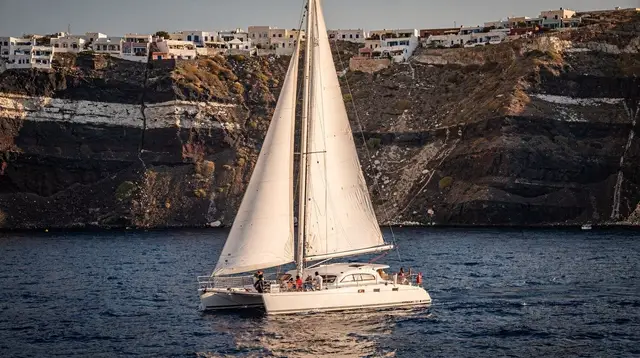
Vlychada also has something none of the other south-coast beaches have: a working marina. Santorini’s main yacht marina sits at the eastern end of the beach, with cafes, a chandlery and boats moored against a backdrop of the same eroded cliffs. It gives the place a slightly different rhythm from Perissa or Kamari — part beach, part small harbour town — without changing how easy it is to reach.
Getting There
Vlychada is on paved roads with regular signage, and the drive from most of the island’s main bases takes well under half an hour:
| From | Approximate driving time |
|---|---|
| Fira | 20–25 minutes |
| Perissa | 10 minutes |
| Akrotiri | 10–15 minutes |
| Airport (JTR) | 15–20 minutes |
A rental car or scooter is the most flexible way in, and the road down is straightforward compared with some of the caldera villages — for anyone weighing options for the rest of the island, driving in Santorini and renting a car or scooter are worth reading before deciding. There’s a car park near the marina and along the beach road. Bus service to Vlychada is thinner than to Perissa or Kamari, so most visitors arrive by car, scooter, taxi, or as part of an organized beach or photo tour.
If you’d rather not drive, a private tour that includes Vlychada alongside other south-coast stops removes the parking and navigation altogether. A private half-day beach tour is one straightforward way to see Vlychada’s cliffs without renting a vehicle.
What the Beach Actually Looks Like
The developed stretch of Vlychada runs along a beach road lined with sunbeds, umbrellas, tavernas and beach bars — visually much closer to Perissa than to anything remote. What sets it apart is directly behind: a tall face of compacted volcanic ash and pumice, bleached almost white by the sun, that erosion has sculpted into vertical grooves, shallow hollows and the odd freestanding pillar. In places it looks like a scaled-down canyon wall; in others, like sand dunes that have somehow turned to stone. It’s this backdrop, not the water or the sand, that separates a photo taken at Vlychada from one taken anywhere else on the island’s south coast.
The sand itself is the same dark volcanic grain found from Kamari to Perivolos — fine, dark grey to black, and hot. On a clear summer afternoon it can be uncomfortable to cross barefoot by mid-morning and genuinely painful by midday; sandals or beach shoes are worth packing, and a beach mat helps for the stretch between a sunbed and the waterline. This is true of every beach on this coast, not a special hazard unique to Vlychada, but it’s easy to underestimate on a first visit.
The water is generally calm and shelves gradually in the main developed section, comparable to swimming conditions at Perissa. Like the rest of the south coast, Vlychada is exposed when the meltemi picks up, which can bring choppier water and blown sand in July and August; checking conditions before a swim-focused visit is worth the two minutes it takes.
Facilities: More Than People Expect
One misconception worth correcting directly: Vlychada is not an undeveloped or hard-to-reach beach that happens to have a dramatic backdrop. It has sunbed and umbrella rows, beach bars, tavernas serving lunch and drinks through the afternoon, and — thanks to the marina — a slightly wider range of cafes and small shops than a typical stretch of Cycladic sand. Loungers by day, a beer or a plate of grilled fish as the light softens, are as easy to arrange here as at Perissa or Kamari.
The marina end adds another layer: yachts and sailing boats moored against the cliff face, a handful of harbourside restaurants, and departure points for some of the boat trips and water-sports operators that work this side of the island. It’s worth a walk even for visitors who came only for the cliffs and the sand.
Cliff Safety and Getting Around on Foot
The cliffs are the reason to come, but they’re also softer than they look. The pale rock is compacted volcanic ash and pumice, not solid stone, and wind and rain keep reshaping it — the same process that carved the ridges and hollows also loosens material at the base after heavy rain or strong wind. Treat the cliff face as a backdrop rather than something to climb or sit directly under, and keep an eye on children wandering close to the overhangs for a photo. This is a different kind of hazard from the sheer red cliffs at Red Beach, where the access path itself is the main concern, but the general rule is the same on both south-coast sites: admire the rock from a few metres back rather than at its base.
Getting around Vlychada on foot is easier than at most Santorini beaches. The beach road behind the sunbeds is paved and flat all the way to the marina, which makes it manageable for pushchairs and for visitors who’d struggle with steps or gravel paths elsewhere on the island. The sand itself is loose and uneven like any volcanic beach, so reaching the water or a sunbed further from the road takes more effort; anyone weighing which beaches work best for limited mobility should check the Santorini accessibility guide, and the broader Santorini beaches guide is a useful reference for comparing surface and access conditions across the island’s other options.
Photography: Why People Actually Come
For most visitors, Vlychada’s real draw is the picture, not the swim. The cliffs give a backdrop unlike anything else on Santorini — closer to desert canyon country than to a Greek island — and the contrast between pale, textured rock and dark sand photographs distinctly even in flat light.
A few practical notes for anyone planning a visit around photos specifically:
- Late afternoon puts low, raking light across the ridges and hollows, deepening shadows and bringing out the texture in the rock. This is the strongest light for the cliffs themselves.
- Early morning is quieter and still workable, though the light sits flatter on the cliff face than in the late afternoon.
- Midday is the least flattering light for the rock texture and also the hottest time to be on dark sand — worth avoiding for both reasons.
- The cliffs, not the sunset, are the subject here. Vlychada faces a direction that doesn’t deliver the kind of open-water sunset that Oia is known for; anyone chasing that specific shot should look at the island’s best sunset spots instead.
For a full-service option, a private beach tour built around photography can time a visit to Vlychada for the right light and combine it with other south-coast stops in the same afternoon. Anyone planning several photo locations across the island in one trip may also find it useful to read the broader best photo spots in Santorini guide alongside this page.
Beyond the Beach Towel: Horse Riding, Water and the Marina
Vlychada is also the starting point for one of the island’s more distinctive activities: riding along the coastline itself. A horse riding trip from Vlychada toward Eros Beach follows the shoreline past the cliffs from a completely different vantage point than a beach towel offers, and it’s one of the few ways to see this stretch of coast from the water’s edge rather than from the sand.
For a more active, splash-first afternoon, the neighbouring beaches along this coast run their own water activities: a tubing session at nearby Perivolos is a short drive away and pairs naturally with a morning spent at Vlychada. And for anyone who wants a straightforward, no-planning beach afternoon on this side of the island, a sunbed package at a beach bar in nearby Perissa covers loungers, shade and food in one booking.
The marina itself is worth a slow walk regardless of what else is planned: moored sailboats set against the same pale cliffs, a scattering of harbourside cafes, and a noticeably calmer pace than the beach road a few hundred metres away.
Vlychada and Akrotiri: A Natural Pairing
Vlychada’s location makes it an easy add-on to a visit to Akrotiri, the Bronze Age Minoan settlement buried by the same eruption that shaped the caldera and now sheltered under a bioclimatic roof — a site covered in full in the Akrotiri excavations guide. Ruins in the late morning, when the covered site offers welcome shade, followed by cliffs and a swim at Vlychada as the afternoon light improves, makes for one efficient half-day on the island’s southern tip without much driving between stops.
What Vlychada Isn’t
A few things worth being clear about before setting expectations:
- It isn’t a hidden or empty beach. It’s a developed stretch of coast with sunbeds, restaurants and a marina — the cliffs are dramatic, the infrastructure is ordinary.
- It isn’t the place for a classic Santorini sunset. For that, the caldera-facing villages and boats covered in the sunset guide are the better choice.
- It isn’t a substitute for the Red Beach or Akrotiri’s beaches. Those have their own access questions and their own pages — see the Red Beach access guide and the white and black beach guide near Akrotiri — and shouldn’t be conflated with Vlychada’s very different, very accessible setup.
- The sand isn’t cooler here than elsewhere. Dark volcanic sand behaves the same way up and down this coast; footwear is a good idea at Vlychada exactly as it is at Perissa or Kamari.
Practical Notes for a Visit
Plan on at least two hours to make the most of Vlychada: enough time to walk the length of the cliffs, settle in for a swim or a drink, and catch the marina before or after. Adding a photo-focused late afternoon slot, or building it into a longer south-coast day with Akrotiri and Perissa, is the most efficient way to use the drive down.
Cash is useful for smaller tavernas and beach bar tabs, sun protection is essential given the exposed, reflective sand and cliff faces, and footwear for the walk across the sand is worth packing regardless of the season. Those planning a broader trip around the island’s weather patterns may also want to check the month-by-month weather guide before settling on dates, since the meltemi’s effect on this coast varies noticeably between June and September.
Whether the plan is an hour with a camera, an afternoon on a sunbed, or a ride along the shoreline on horseback, Vlychada delivers a side of Santorini that looks nothing like the postcard caldera view — while remaining exactly as easy to reach as the beaches that do.
Beaches on GetYourGuide
Verified deep-linked GetYourGuide tours. Book through these links and we earn a small commission at no cost to you.
GetYourGuide does not provide a product photo for this activity — the image shows the meeting point, photographed by us.