Morning Cruise or Sunset Cruise in Santorini?
Should I book a morning or a sunset caldera cruise in Santorini?
A morning cruise is cooler for walking Nea Kameni's crater and swimming at Palea Kameni's hot springs before midday heat sets in. A sunset cruise trades the hike for the view of Oia's cliffs lit up from the water, without competing for space at the Kastro.
Two very different hours on the same caldera
Book a caldera cruise in Santorini and the first real decision is not which boat, nor whether the tour is private or shared — it is what time of day you leave the dock. A morning departure and a sunset departure cover roughly the same water, the same Nea Kameni crater and the same Palea Kameni hot springs, but they deliver two almost unrelated experiences.
Morning is about temperature and elbow room: cooler air for the climb, calmer water for swimming, and a caldera that has not yet filled up with every other boat on the island. Sunset is about the view itself — watching the light change on the caldera wall from below, instead of fighting for a ledge in Oia.
This page only answers that one question: morning or sunset. It does not get into catamaran versus traditional sailing boat, which is covered in Catamaran vs Sailing Boat in Santorini’s Caldera, and it does not weigh private cruises against shared ones, which belongs on Semi-Private vs Shared Caldera Cruises in Santorini. And if the real question in your head is boat versus land at sunset — cruise or a table in Oia — that comparison lives on Sunset Cruise or Oia on Foot? How to Choose in Santorini. Here, the boat is already decided. The clock is not.
What a morning cruise actually buys you
The single biggest argument for morning is heat. Santorini’s volcanic paths hold nothing back from the sun, and the walk up to the active crater on Nea Kameni is a dusty, shadeless thirty-minute climb over loose black cinder. Doing it at nine or ten in the morning, before the rock has spent hours absorbing sunlight, is a meaningfully different experience than doing it at two in the afternoon in July. Most itineraries built around a caldera morning cruise are timed for exactly this — leave early, land on the volcano while it is still tolerable, then move on to swim.
That swim is the second reason morning wins for a lot of travellers. The hot springs at Palea Kameni are not actually hot in any dramatic sense — more like warm, iron-tinted water that seeps out near the shoreline, and you reach it by jumping off the boat and swimming, not by walking onto land. In the cool of the morning, wading into water that is a few degrees above the surrounding sea feels pleasant. By mid-afternoon, with the air already hot, the temperature contrast barely registers. One practical note that belongs on every page about these springs: the water is mineral-rich and will stain light-coloured swimwear, sometimes permanently, so leave the white bikini at the hotel.
Morning also tends to be calmer on the water itself, before the meltemi — the persistent summer wind from the north — has had all day to build. Sailing conditions in the caldera are generally more comfortable earlier, which matters if seasickness is a concern or if the plan includes snorkelling stops. Crowds are lighter too, though “lighter” does not mean empty: cruise-ship passengers coming into Athinios can add extra boats onto the water at any hour, and the entrance to the Nea Kameni crater path can still bottleneck when several tour groups land within minutes of each other.
If a full day on the water with time for the volcano, the springs, and a swim before lunch sounds right, a longer sailing format like the Dreamcatcher five-hour sailing cruise or a smaller-group option such as a private morning cruise with a barbecue lunch on board both build the day around morning conditions rather than squeezing it in before an afternoon flight.
What morning does not give you is the sunset itself. If seeing the sky change colour over the caldera is the actual point of the trip, no amount of good light at 10am substitutes for it.
What a sunset cruise actually buys you
The case for sunset is almost entirely about where you are standing when the light changes. On land, the obvious spot is the Byzantine Kastro in Oia, and in high season that spot fills up ninety minutes to two hours before the sun goes down — a slow-motion crush of tripods, elbows, and people saving a rail spot since mid-afternoon. A sunset cruise sidesteps the entire problem by putting you on the water, looking up at the cliff instead of standing on it. You get the same light on the same white houses, from an angle almost nobody photographs from land, and you do not need to arrive two hours early to get it.
There is also a practical logistics upside: a sunset cruise removes the need to find a table, a bar seat, or a viewpoint at all. Formats built specifically around this hour, like the five-hour private sunset cruise with barbecue and drinks, treat the sunset as the finale of a longer sail rather than the entire trip, so you are not simply idling offshore waiting for the sky to do something.
For travellers who want the golden hour paired with something to taste rather than just to watch, a sunset wine tasting at the Athenian House is a land-based alternative worth knowing about even though it is not a cruise — it is a useful comparison point for anyone still deciding between water and shore, alongside the fuller breakdown on Best Sunset Spots in Santorini Beyond Oia and the honest write-up of crowd-avoidance tactics on Oia Sunset Without the Crowds.
The trap with sunset cruises is timing expectations. Every operator’s schedule shifts month to month because the sunset itself moves by more than three hours across the year — from around 8:50pm in late June to roughly 5:15pm in late December. A cruise booked for “sunset” in September will leave the dock at a completely different clock time than one booked in December, and the boat’s exact departure window should always be confirmed against the season you are actually travelling in, not assumed from a friend’s photos taken in a different month. Nobody selling a Santorini sunset cruise, this site included, should ever hand you a single fixed hour and call it accurate.
Sunset cruises are also busier than mornings, for the obvious reason that everyone wants the same hour. Boats cluster in the same stretch of water as the light drops, and the meltemi, when it is blowing, tends to be at its most noticeable in the afternoon — worth checking before you book a smaller boat in peak wind months, a subject covered in more depth on The Meltemi Wind in Santorini, Explained.
Side by side
| Morning cruise | Sunset cruise | |
|---|---|---|
| Best for | Nea Kameni’s crater and the hot springs at Palea Kameni | The view of the caldera cliff and Oia lit up, without the crowd on land |
| Comfort | Cooler air, calmer water, easier climb | Warmer light, but hotter deck earlier in the itinerary |
| Crowds | Lighter, though cruise-ship days still add boats | Heaviest hour of the day on the water, everyone chasing the same light |
| Swimming | Best window for the springs and any snorkelling stop | Sometimes skipped to leave time for the approach to Oia |
| Timing risk | Departure times are stable across the year | Departure time shifts by hours between June and December — always confirm the season’s sunset window |
| Good match | Travellers prioritising the volcano and a proper swim | Travellers prioritising the sunset itself over anything else on the water |
Which one fits the rest of your day
The cruise itself is only half the planning. A morning departure that gets you back to the dock by early afternoon leaves the rest of the day open for anything that would otherwise compete with sunset plans — a walk through the museums and shops of Fira, a wine tasting at one of the wineries above Megalochori or Pyrgos, or simply a slow lunch with a caldera view before deciding, separately, whether to chase the sunset from land that evening. Because the boat is already back, you are not choosing between the cruise and an evening in Oia; you can still do both on the same day.
A sunset departure works the other way around. With the boat not leaving until late afternoon, the whole morning and early part of the afternoon are free for the sites that reward an early start precisely because they get hot and crowded later — the ruins at Akrotiri, the hilltop city of Ancient Thira above Kamari and Perissa, or a quiet swim on the black-sand beaches before the tour buses arrive. Travellers staying near Fira or Firostefani often use that stretch to fit in a full excursion without feeling rushed, then head down to the water with time to spare before boarding.
Neither pairing is objectively better; it comes down to whether you would rather protect your morning or your evening. Cruise-ship passengers with a single day ashore tend to lean towards morning, since it leaves the most flexible block of daylight for whatever else the port schedule allows once the ship’s own clock starts running.
Practical notes that apply to either departure
A few things matter whichever slot you book. Bring closed shoes or sturdy sandals — the cinder path on Nea Kameni is sharp and unforgiving in flip-flops. Bring cash for the crater entrance fee, since it is charged on the island rather than folded into most cruise prices. Bring a change of clothes if the itinerary includes the hot springs, given the staining. And check the general packing and logistics guidance on What to Bring on a Santorini Caldera Cruise before either departure, since sun protection needs differ noticeably between a 9am start and a 6pm one.
It is also worth remembering that Santorini’s volcanic activity is dormant, not absent — the last eruption was in 1950, and there is nothing to see erupting on either cruise. The seismic swarm that shook the area between Santorini and Amorgos in early 2025 lasted around forty days, produced tens of thousands of small tremors, and ended without an eruption; it has no bearing on whether a cruise runs today, but it explains why you might see it mentioned elsewhere on this site when volcanism or safety comes up. Neither the morning nor the sunset option involves any added risk connected to it.
For photography specifically, the two hours produce genuinely different pictures rather than a better and a worse version of the same one. Morning light is clean and slightly cooler, good for wide shots that show the layered geology of the caldera and the black rock of the islets. Sunset light is warm and low, and it is the only time of day the cliff face of Oia glows the way it does in every postcard — but you are one of dozens of boats trying to capture the same fifteen minutes.
Viewpoints on land at that hour, from Imerovigli and the Skaros Rock to the quieter terraces away from the Kastro, are a genuine alternative if being on a crowded boat at the busiest hour of the day sounds worse than being in a crowd on land — that trade-off is unpacked fully on Sunset Cruise or Oia on Foot? How to Choose in Santorini.
Making the call
If the volcano, the swim, and a calmer, cooler few hours on the water matter more to you than the sunset itself, book morning. If the one image you actually want from Santorini is the cliff catching the evening light, and you would rather watch it from the water than queue for a spot on land, book sunset — but check that specific departure’s timing against the month you are travelling, since no fixed hour applies across the year.
Either way, treat this as one decision inside a longer trip: pair it with an Oia morning before the crowds using a tour like the caldera morning cruise, or build your whole day around it using the One Day in Santorini: The Perfect Itinerary Without a Car itinerary, which slots either cruise time into a fuller schedule around Fira and the villages.
Popular Santorini experiences on GetYourGuide
Verified deep-linked GetYourGuide tours. Book through these links and we earn a small commission at no cost to you.
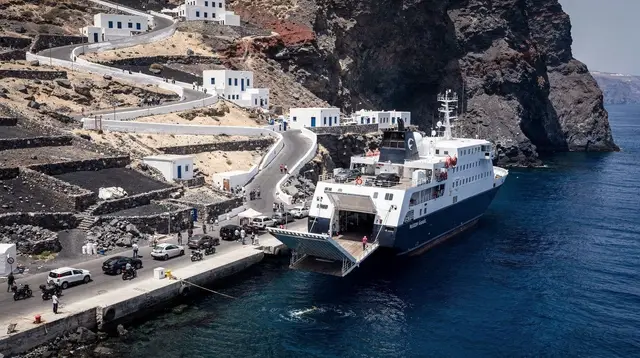
GetYourGuide does not provide a product photo for this activity — the image shows the meeting point, photographed by us.