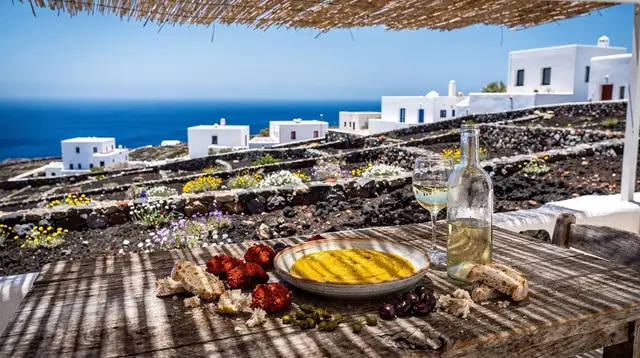
Santorini Cooking Classes: What to Know Before You Book
What happens in a Santorini cooking class?
Small groups cook Greek dishes such as fava and tomatokeftedes with a local chef, usually at a taverna or a winery on the caldera or the inland villages. Most sessions run two to four hours, end with eating what you made, and often add a glass of Assyrtiko or Nykteri to the meal.
A Different Kind of Food Activity
Most visitors to Santorini eat well without trying. Tavernas are everywhere, the produce is good, and a decent meal barely takes planning — that’s the territory covered in where to eat by village. A cooking class is a separate thing: an activity you book in advance, join with your hands, and leave having actually made the food rather than ordered it. It sits closer to a photoshoot or a boat trip on this site than to a restaurant recommendation, because the point is doing something, not just eating something.
That distinction matters because Santorini also sells wine tastings, and the two get confused constantly. A wine tasting is seated: someone pours several glasses of Assyrtiko, Nykteri, or Vinsanto in sequence and talks you through them. A cooking class is standing at a counter, chopping tomatoes, and shaping fava into something you’ll eat an hour later. They belong in different categories here — food-drink for the class, wine-tasting for the tasting — and a class that happens to end with a poured glass doesn’t become a tasting just because wine touched the table.
Where These Classes Happen
Cooking classes on Santorini tend to avoid the caldera villages. Fira, Oia, and Imerovigli are built for views and sunset crowds, not kitchen space, so most hosts operate inland or on the south side of the island, where there’s room for a proper cooking area and, often, a garden or vineyard attached. Megalochori and Pyrgos both host operators in restored village houses, and several classes run out of wineries around Santorini’s vineyard belt, pairing the cooking with the estate’s own bottles.
A handful of operators keep things closer to Fira for guests without a rental car, picking up from central hotels and driving inland as part of the package. If you’re not driving yourself, check the listing for pickup before booking — see driving in Santorini and renting a car or scooter if you’re weighing whether to have your own transport for the week.
What You’ll Actually Cook
Almost every class on the island builds around the same core dishes, because they’re the ones that define Santorini’s kitchen specifically rather than Greek food in general:
| Dish | What it is | Why it’s on Santorini’s menu |
|---|---|---|
| Fava | A puree of yellow split peas, olive oil, and lemon | Grown locally in volcanic soil; the island’s signature starter |
| Tomatokeftedes | Fried tomato fritters with herbs and onion | Made with Santorini’s small, intensely sweet cherry tomatoes |
| Greek salad (horiatiki) | Tomato, cucumber, olive, feta | A baseline recipe, but the tomatoes here taste noticeably different |
| Stuffed vegetables (gemista) | Tomatoes or peppers filled with rice and herbs | A slower dish some classes build the session around |
| Grilled cheese (saganaki) | Pan-fried cheese, often with honey | A quick, reliable crowd-pleaser at the start of a meal |
If you want the dishes explained on their own — where they come from, what makes the local tomato and fava different from versions elsewhere in Greece — that ground is already covered in fava and tomatokeftedes explained. This page is about the class itself, not the recipe.
Choosing a Format
Three cooking-focused formats show up repeatedly in Santorini listings, and they’re not interchangeable.
A straightforward hands-on class with a chef. You show up at a set time, a chef leads the group through two or three dishes, and the class ends with everyone eating what they made. This is the simplest booking and the easiest to fit into a day that has other plans in it.
a hands-on cooking class led by a local chefA class built around lunch and wine. The cooking portion is similar, but the structure is designed around a full seated meal afterward, usually with more courses and a wine pairing running through it rather than a single glass at the end.
a cooking class that includes a full lunch and wine pairingA farm-to-table version with a local farm visit. This adds a stop at a working farm before the cooking starts — seeing where the tomatoes, herbs, or vegetables actually grow in volcanic soil before they land in a pan. It takes longer than the other two formats and suits a day with nothing else scheduled.
a farm-to-table food tour with a working farm visitIf none of the three quite fit and you’d rather taste the island’s wine without cooking anything, that’s a separate activity — see the Santorini wine tasting guide rather than trying to make a cooking class do double duty.
Cooking Class or Wine Tasting: How to Decide
This is the choice most people actually need help with, since both activities get marketed under similar-sounding names.
| Cooking class | Wine tasting | |
|---|---|---|
| What you do | Stand, chop, cook, then eat | Sit, listen, taste several pours |
| Typical length | 2–4 hours | 1–2 hours |
| Physical involvement | Hands-on the whole time | Passive, seated |
| What you leave with | A meal you made, sometimes a recipe | Knowledge of Assyrtiko, Nykteri, or Vinsanto styles |
| Best for | Travellers who want to do something with their hands | Travellers who want to understand the wine, not cook |
| Where to read more | This guide | Wine tasting guide |
Some hosts blur the line on purpose — a winery running a cooking class will naturally pour their own bottles with the meal — but the activity you’re booking is still defined by what fills most of the time. If a listing spends most of its description on tasting notes and flights, it’s a tasting. If it spends most of its description on chopping, kneading, and a chef’s demonstration, it’s a cooking class, wine or no wine.
What to Expect on the Day
Groups tend to be small, often eight to fifteen people, since kitchen space on the island is limited. Expect an apron, a cooking station shared with one or two other guests, and a chef who demonstrates a step before letting the group repeat it. Classes run in English as standard, with staff switching to Greek among themselves.
The meal at the end is the reward, and it’s usually generous — most people leave full rather than peckish. If wine is part of the package, it will most often be an Assyrtiko, the island’s dry, mineral white, though a Nykteri or a splash of Vinsanto with dessert isn’t unusual at winery-hosted classes. Check the specific listing rather than assuming; not every class includes wine, and a few charge separately for it.
Dietary requests — vegetarian, gluten-free, allergies — are usually accommodated if flagged in advance, since the core dishes (fava, tomatokeftedes, salad) are naturally vegetarian and easy to adapt. Ask before the day, not on arrival.
What It Costs and Getting There
Prices for a straightforward hands-on class typically start around €70 to €90 per person. A format built around a full lunch and wine pairing runs closer to €110 to €150, and farm-to-table sessions with a farm visit and extra courses sit at the top of that range or above it. Group size moves the price more than the menu does — a private class for two or three costs noticeably more per head than joining a shared table of eight to fifteen.
Without a rental car, the inland villages where most classes are hosted aren’t always convenient by taxi alone. Check buses in Santorini for routes toward Megalochori or Pyrgos before assuming a taxi is the only way in — a KTEL bus can cover part of the trip for a fraction of the fare, even if it won’t drop you at the door. If you’d rather build a cooking class into a fuller day rather than book it as a standalone evening, day trips from Santorini and the roundup of combo tours both cover how a class like this pairs with other activities on the same itinerary.
Who a Cooking Class Suits
This activity works well for travellers who’ve already done the postcard stops — a sunset in Oia, a walk through Fira, maybe a caldera cruise — and want an evening or afternoon that isn’t just another view. It also suits couples or small groups looking for something more interactive than a restaurant booking without going as far as a full-day excursion.
It suits families reasonably well too: shaping tomatokeftedes or rolling dough gives children something to do, though a hot stove and knives mean it’s worth checking a class’s stated minimum age rather than assuming every session is built for young kids. If you’re planning the trip around children generally, Santorini with kids style planning sits in a separate guide.
It suits less well: travellers on a tight one-day visit from a cruise ship, where a two-to-four-hour class competes directly with limited shore time — a shore excursion built around sights rather than cooking usually makes better use of a single day.
Booking Tips
Book ahead in the June-to-September stretch. Kitchen space on the island doesn’t scale the way a restaurant table does, and popular classes fill days in advance during peak season. Shoulder months — May and October — carry the same experience with more availability and a cooler kitchen.
Read the listing for what’s included before comparing price: whether wine is part of the package, whether pickup from your hotel is offered, and how many dishes the session actually covers. A lower price sometimes means fewer dishes or no drink included, not a better deal.
If you’re building a full day around food rather than a single activity, pair a cooking class with a quieter morning — a village walk through Pyrgos or Megalochori works well before an afternoon or evening class, since both villages sit inland near where most classes are hosted.
A Meal You Make Rather Than Order
The value of a cooking class on Santorini isn’t that the food tastes different from what a good taverna serves — it often doesn’t, and that’s the point. The value is in the two or three hours spent learning why fava works the way it does, why the tomatoes taste the way they do, and leaving with a plate you made rather than one that arrived. Whether you add wine to that afternoon is a separate decision, worth making on its own terms rather than folding into the cooking booking by default.
Santorini Cooking Classes: Your Questions Answered
How long does a Santorini cooking class last?
Most run two to four hours, including preparation, cooking, and the meal at the end. Farm-to-table formats that add a visit to a local farm can run closer to five hours.
Do I need cooking experience to join?
No. Classes are built for visitors, not aspiring chefs, and staff walk each station through the steps. Recipes tend to use a handful of pantry vegetables, olive oil, and local cheese rather than difficult technique.
What dishes will I actually cook?
Fava, tomatokeftedes, and a Greek salad with Santorini cherry tomatoes come up in almost every class, along with dishes such as stuffed vegetables or grilled cheese depending on the host.
Is wine included in a cooking class?
Some are, some aren’t. Read the listing carefully: a few classes pour a single glass with the meal, others build a fuller pairing with Assyrtiko or Nykteri, and a few are food only. If wine matters to you, check before booking.
Is a cooking class the same as a wine tasting?
No. A cooking class is a participatory activity built around preparing food, while a wine tasting is a seated comparison of several wines led by a host who explains each pour. They sit in different categories on this site and are worth choosing between, not combining by accident.
Where do cooking classes take place?
Usually at a taverna, a private house, or a winery, most often inland around Megalochori, Pyrgos, or Vothonas, away from the caldera villages. A few operators run classes closer to Fira for convenience.
Should I book a farm-to-table version instead?
Book it if you want the extra step of picking or seeing where ingredients grow before you cook them. It adds time and usually cost, and suits travellers with a full day free rather than an evening slot.
Are cooking classes suitable for families?
Many are, and kneading dough or shaping tomatokeftedes gives children something to do with their hands. Confirm the minimum age with the operator, since knife work and a hot stove are part of the room.
Food and drink tours on GetYourGuide
Verified deep-linked GetYourGuide tours. Book through these links and we earn a small commission at no cost to you.
GetYourGuide does not provide a product photo for this activity — the image shows the meeting point, photographed by us.