The Flying Dress Photoshoot in Santorini
What is a flying dress photoshoot in Santorini, and where is it shot?
It's a styled shoot where a photographer holds a length of light fabric so the wind lifts it around you, most often at Imerovigli or the Skaros Rock trail above the caldera. The result depends entirely on wind: strong meltemi gusts in summer lift the fabric with no help, while calm spring or autumn air usually needs a portable fan.
A Tissue on the Wind: What a Flying Dress Shoot Actually Is
The image is everywhere: a figure on a white-washed ledge above a blue caldera, a great arc of fabric billowing sideways in mid-air as if the wind itself were part of the wardrobe. That effect has a name — the flying dress photoshoot — and it has become one of the most searched photo formats tied to Santorini. It is not a wedding. It is not a dress you keep. It is a styled portrait session built around one simple mechanic: a photographer, or a second person working as an assistant, holds one end of a long length of lightweight fabric so that the wind lifts, twists, and shapes it while you pose in front of it.
This page covers the mechanics of that specific format — where it happens, how wind changes the outcome, what a session involves, and how to book one sensibly. It does not cover how to choose a photographer, which is a separate decision with its own criteria, covered in santorini-photoshoot-guide, nor does it rank the island’s viewpoints in general, which is the job of best-photo-spots-santorini. What follows assumes you already know roughly where on the island you want your photos and are trying to understand this one specific technique.
Where It’s Shot: Imerovigli and Skaros Rock
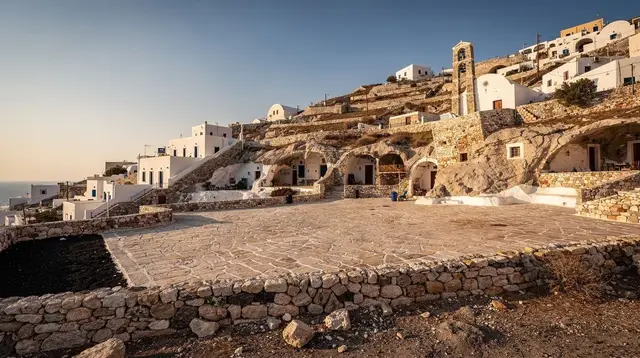
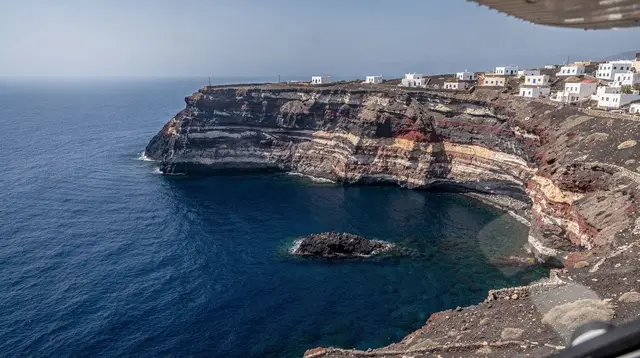
The format is most closely associated with Imerovigli and the trail out to Skaros Rock, the abandoned Venetian fortress promontory just beyond the village. Both spots sit on the highest stretch of the caldera rim, with a wide, mostly unobstructed view across the water toward Thirassia and Nea Kameni. That width matters more than it sounds: a flying dress needs open space behind and beside the subject for the fabric to move without snagging on railings, prickly pear, or a neighbor’s balcony.
Oia is the island’s most photographed village overall, and its sunset draws the crowds described in detail on santorini-sunset-guide, but its narrow lanes and packed viewpoints — often swelled further by day-trippers arriving on one of the best shore excursions in Santorini — work against a flying dress shoot; there is rarely enough open space to swing several meters of fabric without it catching on something or someone. Photographers who specialize in this format tend to steer couples toward Imerovigli specifically because it offers the caldera backdrop with room to work, and toward the quieter final light near oia-sunset-without-the-crowds only when Oia itself is the non-negotiable request.
Firostefani, between Fira and Imerovigli, is sometimes used as a fallback when Imerovigli’s viewpoints are busy — it shares the same caldera orientation on a smaller, less-visited stretch of path.
The Wind Decides Everything
Every other decision on this page is downstream of one variable: wind. Santorini’s dominant summer wind is the meltemi, a dry northerly that builds through July and August and is covered in full on the-meltemi-wind-explained. During meltemi season, fabric lifts on its own, sometimes violently. That sounds like exactly what a flying dress shoot wants, and in a controlled, moderate breeze it is.
But a meltemi at full strength does three things a soft breeze does not: it makes several meters of wet or dry fabric genuinely hard to hold and aim, it can throw grit and small debris into skin and eyes near an exposed cliff edge, and it turns an unplanned step backward — taken to keep tension on a fabric that’s fighting back — into a real fall risk on a rim with no guardrail in most stretches.
That last point is worth repeating because it is the single most common mistake in how this experience gets marketed: treating “strong wind” as an unqualified positive. It is not. A working photographer who does this regularly reads the wind on the day and adjusts the shoot to it — shooting from a stance further back from the edge on a gusty day, using a shorter fabric, or timing shots between gusts rather than fighting a sustained blow. If a wind day makes the fabric photograph beautifully but the guide is asking you to lean out further to catch it, that is the moment to say no, not the moment to trust the picture.
The flip side is just as real. Spring and autumn — the shoulder season covered on santorini-in-the-shoulder-season — often bring genuinely still mornings, especially before mid-morning heat starts to build local air movement. On those days, a length of fabric held out by hand simply hangs.
This is why most photographers who shoot flying dress as a regular part of their work carry a portable, battery-powered fan: not as a backup for a bad day, but as standard kit, aimed at the fabric from just out of frame to recreate the lift that a light breeze would otherwise give for free. If you book a shoot on a calm week and your photographer doesn’t mention a fan at all, ask about it before the day arrives.
| Wind condition | Typical season | What it means for the shoot |
|---|---|---|
| Calm to light breeze | Spring, autumn mornings | Portable fan usually needed; full control over fabric shape |
| Moderate, steady breeze | Shoulder season, early/late summer | Close to ideal — fabric lifts cleanly, still controllable |
| Strong meltemi | July–August, especially midday | Dramatic but harder to manage; move back from the edge, shorten sessions |
| Gusty and unpredictable | Any season, weather-dependent | Photographer should reschedule the edge portion or shoot from a sheltered angle |
Booking a Flying Dress Session
Two related but different products get booked under this name, and it’s worth knowing which one you’re choosing. Some experiences are built around a dedicated flying dress photoshoot, where the fabric, the photographer, and the location are all part of one package built specifically around this technique. Others separate the pieces: a flying dress rental lets you hire the fabric or gown itself and bring your own photographer, which suits couples who already have someone booked, or who want more say over hair, makeup, and timing independent of a package.
If the occasion is a proposal or an anniversary rather than a generic portrait session, some couples fold the flying dress into a broader staged experience — Santorini the Greek Wedding Show packages a styled, wedding-adjacent shoot with additional staging around it, which is worth comparing against a plain flying dress booking if you want more than one setup out of the morning.
For couples building a full content day rather than a single shoot, a private villa booked for content and photos adds a controlled, private backdrop before or after the caldera-edge portion, useful on a day when wind or crowds make the public viewpoint less workable than planned.
None of these bookings replace the separate decision of choosing a photographer for a non-package shoot, which santorini-photoshoot-guide covers on its own, including what to ask about experience with the flying dress technique specifically — not every portrait photographer on the island has practiced managing several meters of moving fabric in wind, and it shows in the result.
What to Wear, Bring, and Expect
Most flying dress fabric is worn over, not instead of, your own clothing. Bring a swimsuit or a fitted, seamless underlayer to wear beneath it, since the fabric itself is usually sheer or semi-sheer and sessions often move on to portraits without it. Flat, closed shoes for the walk to and from the shoot location matter more than they sound — the paths around Imerovigli and Skaros Rock are uneven stone and gravel, not a paved promenade, a detail worth weighing against what limited-mobility travelers should know before booking, and arriving in sandals meant only for the photo itself is a common regret. A change of clothes, a hair tie for anything past shoulder length, and sunscreen are worth packing regardless of season; even a windy day at altitude burns.
A typical session runs somewhere between 45 minutes and 90 minutes, including time to walk to the spot, set up the fabric, shoot several fabric passes, then move to portraits without it. It is more physically demanding than it looks — holding a pose steady while fighting or working with wind, sometimes for several attempts per shot, tires people out faster than a standard portrait sitting. Building in a short rest between setups, and not scheduling the shoot back-to-back with something else physically demanding like the Fira-to-Oia caldera hike or one of the longer day trips from Santorini on the same day, keeps the energy for the shots that matter.
Timing against the sun matters as much as timing against the wind. Late afternoon light, in the hour or so before the colors described on santorini-sunset-guide begin, gives a warm, low-angle light that flatters both skin tone and fabric color without the flat glare of midday. Booking that slot, rather than an easier-to-get midday appointment, is worth the extra planning.
Safety Near the Caldera Edge
This is the piece of the format that marketing photos never show: most flying dress shoots happen within a few steps of an unfenced drop, because that drop is exactly what makes the caldera backdrop work. That is manageable with a competent photographer and ordinary caution. It stops being manageable when either the wind or the request pushes a subject closer to the edge than the ground safely allows — wet stone, loose gravel, and a wind gust arriving at the wrong moment are a bad combination that has nothing to do with how good the resulting photo looks.
Treat any of these as a reason to pause the shoot: your photographer asking you to stand closer to an edge than feels comfortable, fabric or footing genuinely fighting a strong gust rather than moving with a light one, or a location that has become crowded enough that a step backward risks colliding with another visitor rather than open path. None of that is a reason to avoid the format — it is a reason to book with someone who manages it as a matter of course.
For the island’s broader safety context, including the 2025 seismic activity that some visitors still ask about before booking anything outdoor, see santorini-safety-and-the-2025-earthquakes; it has no bearing on wind or cliff conditions specifically, but it answers the question honestly for anyone who arrives worried about it.
When to Book: Matching the Calendar to the Wind
Because the whole exercise turns on wind, the best time to book a flying dress session is not automatically the best overall time to visit the island. santorini-weather-month-by-month lays out the full seasonal picture; the short version for this format is that shoulder-season weeks — late April into May, and September into October — tend to offer a workable middle ground: enough breeze to move the fabric without a fan on most days, without the meltemi’s harsher gusts or the peak-season crowding at the best viewpoints. Full summer gives near-certain wind but also near-certain heat and a busier Imerovigli path; a photographer working that season needs to manage crowds as much as fabric.
Getting to and from the shoot is worth planning like any other timed activity on the island: if the session sits at the start or end of a longer day that also includes a boat trip, decide in advance whether you’ll reach the pickup point on foot, by the cable car, the steps, or a transfer, or by renting a car or scooter yourself, since arriving flustered and short on time changes how a shoot goes more than most people expect. Couples building a flying dress session into a proposal or honeymoon week often anchor it around a honeymoon itinerary that leaves a full, unhurried morning free rather than squeezing it between transfers.
Pairing the shoot with a boat afterward is common too — many couples follow a morning flying dress session with an afternoon on the water, weighing a catamaran against a sailing boat for a relaxed Santorini sunset cruise to see the same cliffs from below, or booking a full caldera cruise that turns the photo session into one part of a longer day rather than the whole of it.
Flying Dress Photoshoot FAQ: Wind, Timing, and Safety at Imerovigli
What exactly is a flying dress photoshoot?
A photographer or an assistant holds one end of a long, lightweight piece of fabric — sometimes a real dress, sometimes a length of tulle or chiffon worn over your own clothes — so that wind lifts and shapes it mid-air while you pose against the caldera. It is a styled portrait session, not a wedding ceremony or a rental of a dress you keep.
Where in Santorini is it usually shot?
Imerovigli and the Skaros Rock trail are the most common locations because the cliff edge there is wide, faces the caldera and the sunset, and sees less cruise-ship foot traffic than Oia. Some photographers also work from quieter stretches near Firostefani or from private terraces.
Does the meltemi wind make the photos better?
It helps the fabric fly without a fan, but it is not simply better. From roughly July to August the meltemi can gust hard enough to make the fabric hard to control, sting bare skin with grit, and turn a few careless steps near the cliff edge into a real fall risk. A steady breeze helps; a meltemi at full strength is a hazard to manage, not a feature to hope for.
What happens if there’s no wind at all on the day?
Spring and autumn mornings are often close to still. Most photographers who shoot flying dress regularly carry a portable battery-powered fan for exactly this reason, and time the shoot for the brief gusts that do come through rather than waiting for a gale.
Is it safe to do this near the caldera edge?
It can be, if the photographer manages both the wind and the ground underfoot — loose gravel and worn rock are common on the Skaros side. It is not safe to treat a strong meltemi day as an excuse to stand closer to an unfenced drop for a better gust. Ask your photographer how they handle high-wind days before you book.
How long does a session take?
Most flying dress sessions run 45 minutes to 90 minutes, including a change of setup and a short rest between fabric shots, since holding a pose while a photographer manages the fabric is more tiring than it looks.
When is the best time of year to book one?
Late spring and early autumn give a workable middle ground: less extreme wind than peak summer, calmer seas, and photographers who aren’t fully booked out. Summer gives near-guaranteed wind but also near-guaranteed heat, crowds, and the meltemi’s rougher days.
Photoshoots on GetYourGuide
Verified deep-linked GetYourGuide tours. Book through these links and we earn a small commission at no cost to you.
GetYourGuide does not provide a product photo for this activity — the image shows the meeting point, photographed by us.