Spa and Wellness in Santorini
Is there a natural spa or hot spring in Santorini?
No. Santorini has no rivers, springs or usable groundwater — tap water is desalinated seawater. Every spa on the island is a hotel-based facility using imported or bottled water for treatments; the only warm water in the caldera is at Palea Kameni, reached by swimming from a boat, not a spa amenity.
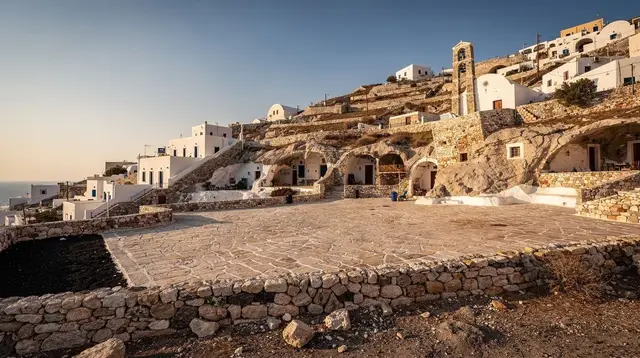
Santorini sells sunsets, wine and a caldera view, but a fair number of visitors also want a few hours indoors, on a treatment table, doing nothing at all. That exists here — just not in the form most spa destinations offer it. There’s no thermal spring feeding a bathhouse, no river valley with a wellness retreat, nothing drawn from the ground. What Santorini has instead is a dense cluster of hotel spas built into caldera-facing cliffside properties, using imported products, desalinated water, and views that no inland spa town can compete with.
Why Santorini has no natural spa water
Start with the fact that shapes everything else on this page: Santorini has no rivers, no year-round springs, and no aquifer worth pumping. The island’s household and hotel water comes from desalination — seawater processed into drinking-and-washing water. It’s safe, but it’s also mineral-heavy and slightly flat-tasting, which is why locals and hotels alike drink bottled water rather than tap water. This matters for a spa guide because it rules out an entire category of destination spa that relies on local mineral water, thermal wells or river-fed pools. Every treatment room in Santorini works with the same desalinated supply as the kitchen next door.
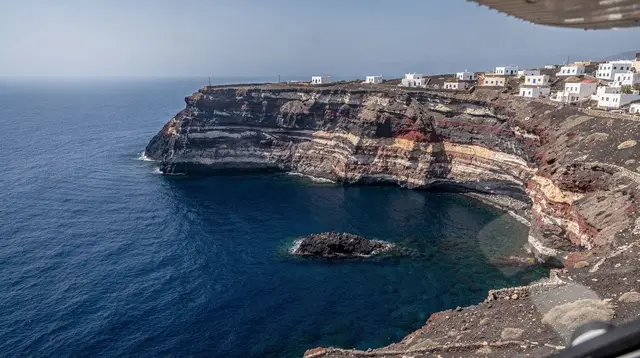
The one genuinely warm, mineral-rich water on the island sits offshore at Palea Kameni, inside the caldera, where underwater vents color the sea rust-orange and warm it slightly above the surrounding water temperature. It is not a spa. There’s no dock, no changing room, no towel service and no treatment menu — visitors swim to it from an anchored boat as part of a caldera cruise, and the water is known to stain light-colored swimwear.
If a wellness day is what you’re after, treat Palea Kameni as a separate, outdoor, boat-based experience — covered in full in our Palea Kameni hot springs guide — and book an actual spa appointment on land for the indoor, pampering part of the trip.
What “spa” means in Santorini in practice
Almost without exception, spa in Santorini means a treatment suite attached to a hotel — often a boutique cave-house property perched on the caldera rim. The format is consistent across the island: one to a handful of treatment rooms, a small menu of massages and facials, sometimes a hammam-style steam room, and frequently a private plunge pool or jacuzzi positioned to catch the same view the hotel sells its rooms on. A handful of larger resorts, mostly around Fira, Kamari and Perivolos, run bigger spa operations with more staff and longer opening windows, closer to what a mainland city hotel would offer.
Vinotherapy is the local specialty worth knowing about. Because Assyrtiko and Vinsanto are genuinely produced on the island — covered in depth in our Assyrtiko explained and Vinsanto guide — a number of hotel spas build grape-seed extract facials or wine-based body wraps around them, alongside volcanic pumice and ash scrubs that lean on the same geology visible in the cliffs outside the window. These treatments are marketing angles as much as science, but the ingredients are at least locally sourced rather than shipped in from nowhere.
| Treatment type | Typical setting | Best fit |
|---|---|---|
| Massage (Swedish, deep tissue, hot stone) | Hotel treatment room, often caldera-facing | Anyone wanting straightforward relaxation |
| Facial / vinotherapy facial | Hotel spa suite | Guests interested in the local Assyrtiko or Vinsanto angle |
| Hammam or steam ritual | Larger resort spas, mostly Fira/Kamari | Couples, longer sessions |
| Private jacuzzi or plunge pool | Boutique caldera hotels, Oia/Imerovigli | In-room or suite-level relaxation, not a public facility |
| Swimming at Palea Kameni | Open sea, reached by boat | Outdoor mineral-water experience — not a spa treatment |
Where the caldera villages differ
Oia and Imerovigli hold the highest concentration of small, high-end spa suites, largely because they hold the highest concentration of cliffside boutique hotels generally. A treatment room with a caldera window in one of these villages is genuinely one of the more memorable settings for a massage anywhere in the Cyclades — but capacity is small, rooms are few, and the same crowds that fill Oia’s sunset viewpoints mean spa slots around golden hour book out first. Firostefani, sitting between Fira and Imerovigli, has a smaller but similar offering at slightly calmer prices.
Fira itself, being the island’s commercial center, has more variety and more year-round operators, including some larger resort-style spas less dependent on a single seasonal crowd. Away from the caldera rim, Pyrgos and the inland wine-country villages have far fewer dedicated spa facilities, since the hotel density that supports them is concentrated on the cliff. On the south and east coasts, Perivolos and Kamari’s larger beachfront resorts run their own spa operations aimed at a different, less caldera-obsessed clientele — often with longer opening seasons than the smaller cliffside boutiques.
Wellness as an indoor alternative, not a competing headline act
It’s worth being direct about what this category is for. Most of what fills a Santorini itinerary — the caldera cruise, the Fira–Oia hike, the wineries, the beach days on volcanic sand covered in our beaches guide — happens outdoors, on foot, in the sun, or on the water.
A spa treatment is the one item on this list that works regardless of wind, heat, a closed archaeological site, or a fully booked boat. That makes it a useful thing to schedule on a windy meltemi day when the sea is too rough for a comfortable cruise, or during a midday heat spike between an early morning walk and an evening out.
It’s also, quietly, one of the better arguments for visiting outside July and August. Off-season Santorini trades sunset crowds for a slower island, and a spa afternoon fits that rhythm far better than fighting for space on Oia’s castle terrace.
The trade-off is real, though: a meaningful share of the smaller caldera-village spas close along with their hotels between November and March, following the same seasonal pattern documented in our month-by-month weather guide. If a spa day is a priority for a winter trip, the larger, more commercially resilient hotels in Fira or Kamari are a safer bet than a small boutique suite in Oia that may simply be shuttered for the winter.
Booking a spa day in Santorini
A few practical points make the difference between an easy afternoon and a wasted one:
- Book ahead, not on arrival. Caldera-facing treatment rooms are few per hotel, and the best sunset-adjacent slots go first. A day or two’s notice is the minimum in high season; a week ahead is safer around Oia’s sunset hours.
- Ask if non-guests are accepted. Many hotel spas will take outside bookings, particularly on quieter weekdays, but guests are given priority and some properties keep the treatment rooms guests-only during peak months.
- Confirm the season. Between November and March, call ahead rather than assuming a spa listed online is currently operating — closures follow the hotel, not a fixed calendar.
- Decide what you actually want. If the goal is a natural, outdoor, warm-water experience, that’s Palea Kameni by boat, not a spa booking. If the goal is an indoor massage or facial with a view, that’s a hotel spa, and the two shouldn’t be confused when planning the day.
- Pair it with something low-key. A spa afternoon sits well against a quiet morning in Firostefani or a slow walk through Pyrgos, rather than being squeezed between two full-day excursions.
For travelers who want the relaxation angle to carry through the rest of the day, a handful of on-water experiences lean the same direction. A private sunset yacht cruise with a yoga session on board pairs an actual wellness practice with the caldera view a spa room can only imitate through a window, and works well as a follow-up to an afternoon treatment rather than a substitute for one.
Travelers curious about something less physical and more reflective sometimes add a tarot reading session to a slow day, treating it as a quiet, low-key activity rather than anything spa-adjacent in the strict sense. And for anyone who simply wants to end the day on calm water after a treatment, a standard sunset cruise around the caldera is the easiest way to close out a wellness-focused afternoon without adding another high-energy activity to it.
Setting expectations
Santorini’s spa scene is genuinely good at the small, high-view, boutique-hotel format — treatment rooms with better windows than most cities can offer at any price. It is not, and doesn’t try to be, a wellness-retreat destination built around natural springs, thermal water or a dedicated spa town.
Visitors coming from destinations like Budapest’s thermal baths or Iceland’s geothermal pools should recalibrate: the water in every Santorini spa is desalinated, imported, or bottled, and the one naturally warm water on the island is a boat-access sea swim, not a facility. Once that’s clear, the caldera-view massage rooms in Oia and Imerovigli, the larger resort spas of Fira and Kamari, and the vinotherapy treatments built around local Assyrtiko are exactly what they promise to be — a good, indoor complement to an island otherwise built around sun, wind and water.
Spa and wellness in Santorini: frequently asked questions
Is there a natural spa or hot spring in Santorini?
No. Santorini has no rivers, springs or usable groundwater — tap water is desalinated seawater. Every spa on the island is a hotel-based facility; the only warm water in the caldera is at Palea Kameni, reached by swimming from a boat.
Can I combine a spa day with visiting Palea Kameni’s hot springs?
You can do both on the same trip, but they’re unrelated. Palea Kameni is an open-water swim to iron-rich, lukewarm water with no facilities, towels or changing rooms — plan it as a boat excursion, then book an actual spa treatment separately, on land, for the pampering part.
Do Santorini spas use local ingredients like Assyrtiko or volcanic ash?
Many do. Vinotherapy treatments built around Assyrtiko grape extract and Vinsanto, plus volcanic ash or pumice body scrubs, are common marketing angles for caldera hotel spas, since both ingredients are genuinely local to the island.
Are hotel spas open to non-guests?
Often yes, especially outside the busiest weeks, though guests get priority booking and sometimes lower rates. It’s worth calling or emailing ahead rather than walking in, since caldera-facing treatment rooms are limited and fill fast around sunset hours.
Do spas close in the off-season?
A significant number of hotel spas in the caldera villages close between November and March along with the hotels that house them, following the same seasonal rhythm as much of Santorini’s hospitality. Larger resorts in Fira, Kamari and Perivolos are more likely to stay open year-round.
What should I book if I want relaxation without going outdoors?
A hotel spa treatment is the indoor option — massage, facial or a hammam-style ritual in a climate-controlled room. This is distinct from the volcano hikes, boat trips and beach days that make up most of Santorini’s outdoor activity list, and it works regardless of wind, heat or a closed archaeological site.
Is the tap water safe to use in spa treatments and showers?
Yes. Desalinated water is treated and safe for washing and bathing; it’s simply mineral-heavy and not pleasant to drink, which is why locals and hotels serve bottled water instead. Spas use it the same way any hotel does, for showers and rinsing rather than as a treatment ingredient.
Which villages have the best spa options?
Imerovigli, Oia and Fira concentrate the caldera-view hotel spas with the highest density of treatment rooms, while Fira and Kamari have larger resort spas that tend to stay open longer into the off-season.
Spa and wellness on GetYourGuide
Verified deep-linked GetYourGuide tours. Book through these links and we earn a small commission at no cost to you.
GetYourGuide does not provide a product photo for this activity — the image shows the meeting point, photographed by us.